Peak Design’s unconventional ball head
Peak Design didn’t just design a new ball head — they rethought the entire concept of what a ball head should be. Most photographers are used to modular setups: you buy the legs, pick a ball head, screw it together, and accept the wasted space and extra height as a fact of life. What Peak Design did is toss that convention aside and build the ball head directly into the center column. That’s not an incremental improvement — it’s a fundamental shift in how tripods can be engineered.
The Structural Logic Behind a Unified Head
From a pure engineering standpoint, a traditional tripod setup has a weak link at the interface between the legs and the head. You have a threaded post, a locking ring, and often an adapter plate — each point is a potential failure point or source of vibration. By making the entire center column a single functional unit, Peak Design eliminates that interface entirely. The ball sits atop a triangular column, and when you collapse the legs, the clamp drops into the leg cluster with no protruding parts. That’s at least 1.5 to 2 inches of usable height reclaimed from the dead zone that other tripods waste.
What You Trade for Zero Wasted Space
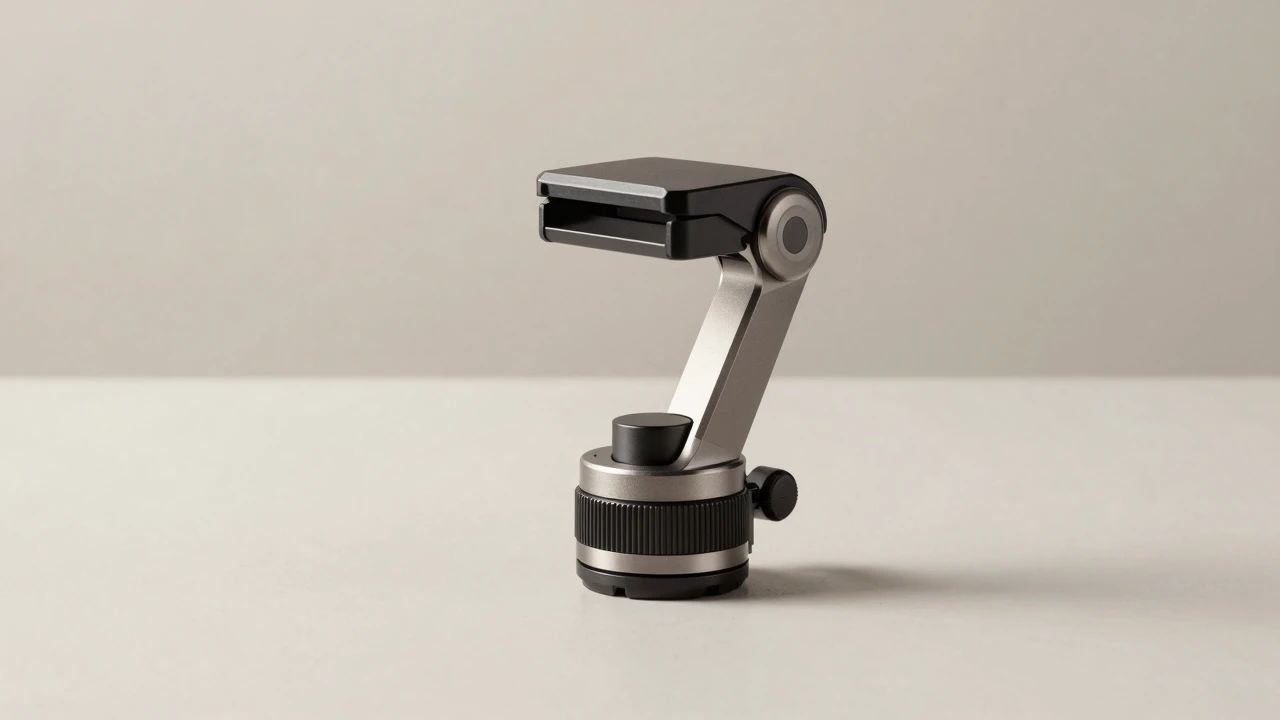
The trick with the Peak design ball head is there’s no such thing as a separate panning knob. On a traditional ball head, you have a main lock for the ball and a secondary lock for panning. The Peak design integrates the panning function into the Arca-Swiss clamp itself. If you need smooth panning for panoramas, you can add a separate base plate on top of the clamp, but that adds back some height and complexity. Peak Design made a calculated trade: they sacrificed a dedicated panning base for a zero-wasted-space closure. For most shooters, especially those who shoot landscapes or travel work, that trade makes perfect sense.
The Clamp Lockdown Behavior
One thing that takes getting used to is the clamp lockup. Because the ball is captive within the center column, the locking action applies rotational force through the clamp differently than a traditional ball head. When you crank the lock down, the composition can shift slightly — more so than with a premium standalone ball head. This is a real point of contention for some photographers. But it’s manageable: frame about 1–2% wider than your final composition, and you’ll have wiggle room. The trade-off is that the clamp is rock solid when locked. There’s zero play, even with a heavy, long lens.
Practical Performance in the Field
Setting up in a rental car with muddy gear, I noticed something I never could with a traditional tripod: the clamp on the Peak Design ball head doesn’t collect dirt or sand in a crevice between legs and head. With a conventional tripod, that junction is a natural dirt trap. Because the Peak Design head sits flush with the legs and the clamp lives inside the leg cluster when collapsed, it’s much easier to wipe down.
The other real win is how fast you can go from folded to ready. Squeeze all four leg locks open at once, pull the legs out, lock them down, extend the center column, and you’re ready to shoot — it’s easily 15–20 seconds faster than a typical twist-lock tripod setup. In a race against fading light, that matters.
A New Paradigm for Travel Tripods
Peak Design’s ball head isn’t a gimmick. It’s a genuinely new way of solving the old problem of “how do I make a travel tripod that doesn’t suck?” The answer involved sacrificing modularity and some premium features for a unified system that packs unconventionally small and is stiff enough to hold a pro setup. It’s not for everyone, but for anyone who values compactness and speed over endless adjustments, it’s a breakthrough.
Join Discussion
No comments yet, be the first to share your opinion!