
Why planar magnetic drivers outperform dynamic drivers in critical listening
Planar magnetic drivers have become the benchmark for critical listening because their physical design eliminates many of the compromises inherent to conventional dynamic drivers. A planar magnetic transducer consists of an ultra‑thin diaphragm that is uniformly suspended within a magnetic field generated by a pair of permanent magnets. When an audio signal passes through the conductive traces embedded in the diaphragm, the entire surface is driven simultaneously. This uniform drive yields an exceptionally fast transient response, meaning that the diaphragm can start and stop moving with minimal lag. In practice, listeners perceive sharper attack on percussive instruments and more precise articulation of fast‑moving passages, which is essential for evaluating recording quality or mixing decisions.
Dynamic drivers, by contrast, rely on a single voice coil attached to a relatively massive cone. The coil’s magnetic field pulls the cone forward and releases it to return, a process that introduces inertia‑related lag. While this design excels at producing deep, punchy bass and remains cost‑effective for mass‑market headphones, it also brings higher distortion at the extremes of the frequency spectrum. The non‑uniform motion of the cone can cause phase smearing, especially in the upper mids where critical detail resides. For listeners who need to discern subtle timbral differences—such as the decay of a piano string or the breathiness of a vocal—these distortions become audible obstacles.
Another decisive factor is the planar driver’s ability to maintain low distortion across a wide frequency range. Because the diaphragm is thin and tensioned evenly, it behaves more like a rigid membrane than a flexible cone. This rigidity reduces flexing that would otherwise generate harmonic artifacts. The result is a cleaner signal with less coloration, allowing the recorded material to be heard as intended by the producer. Dynamic drivers, especially those optimized for bass impact, often introduce harmonic enrichment that can mask fine details.
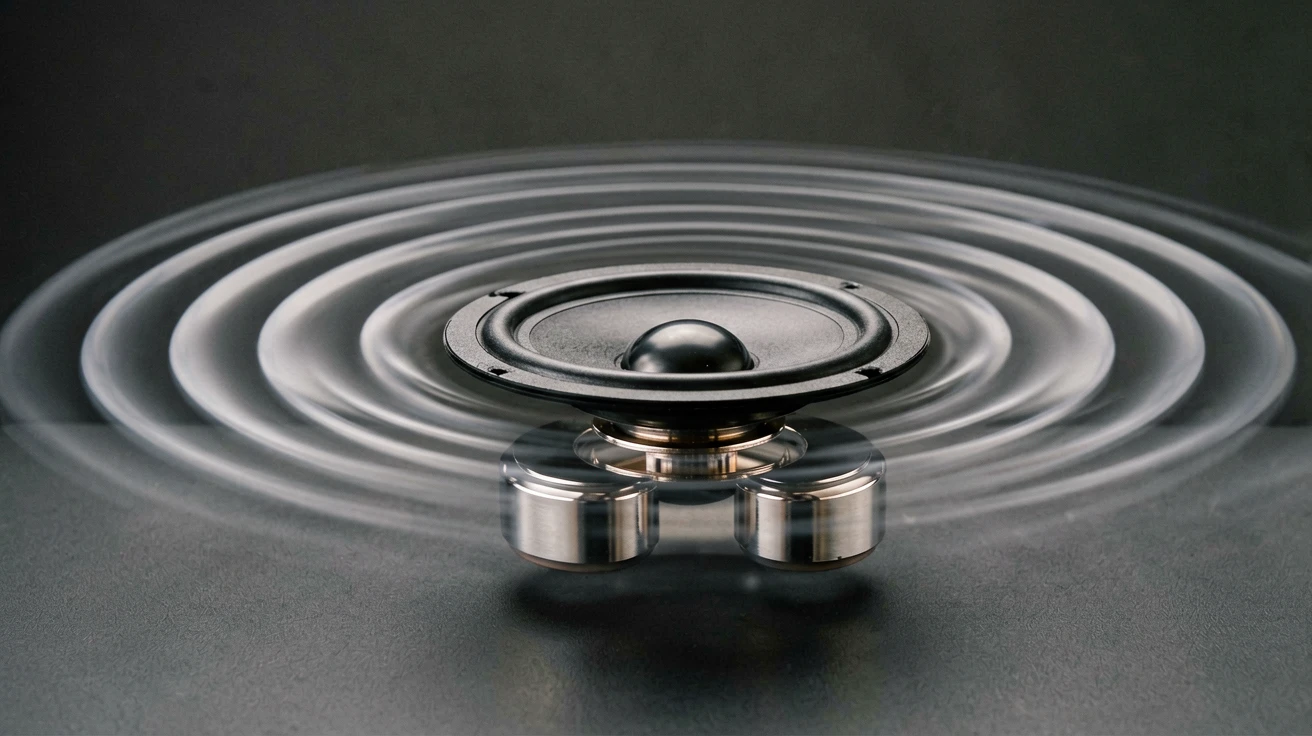
Soundstage width is also markedly improved with planar magnetic technology. The large, planar diaphragm radiates sound more evenly, creating a broader acoustic image that extends beyond the listener’s head. This expansive soundstage helps engineers locate instruments spatially, a capability that is harder to achieve with the more directional output of many dynamic drivers. The Audeze LCD‑S20, highlighted in the source material, exemplifies this advantage with its reputation for delivering a balanced, wide soundstage that many critical listeners favor.
Reliability and consistency are additional considerations. Planar magnetic headphones typically forgo active components such as built‑in amplifiers or noise‑cancellation circuitry, which can introduce latency or processing artifacts. Their purely passive design means the transducer’s performance is dictated solely by its mechanical and magnetic properties, leading to predictable behavior over time. Dynamic drivers in consumer headphones often incorporate electronic enhancements that, while improving perceived loudness, can further obscure the true character of the source material.
In summary, the superiority of planar magnetic drivers for critical listening stems from three interrelated technical attributes: uniform diaphragm actuation that delivers rapid transient response, inherently low distortion across the audible spectrum, and a naturally wide soundstage that enhances spatial resolution. While dynamic drivers remain valuable for portable and bass‑centric applications, their inherent mechanical limitations make them less suited for environments where analytical listening and accurate reproduction are paramount. Selecting a planar magnetic pair, such as the Audeze LCD‑S20, provides audiophiles and professionals with a tool that reveals the nuances hidden in high‑resolution recordings without the coloration or latency introduced by more conventional designs.
Join Discussion
No comments yet, be the first to share your opinion!