Will future cities adopt Singapore’s eco-integration blueprint?
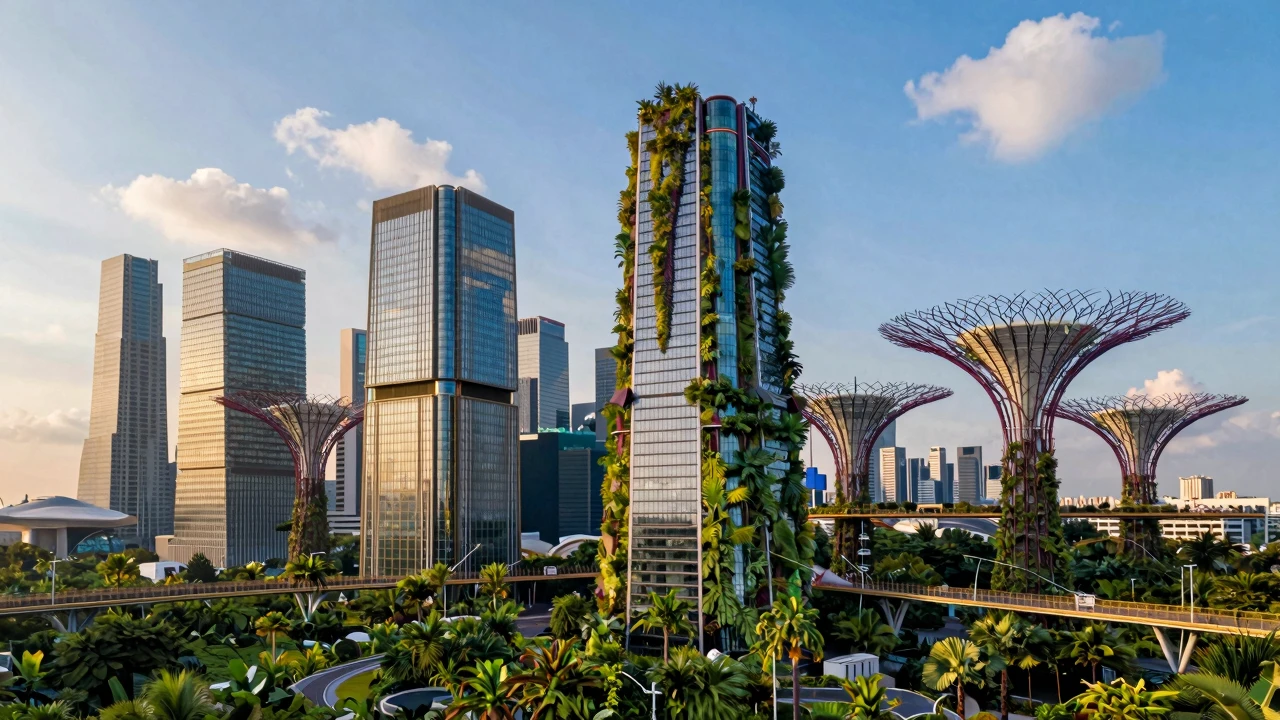
Singapore’s vertical gardens and climate-responsive infrastructure have captured global attention, yet the more pressing question isn’t whether other cities admire this model—it’s whether they can realistically replicate it. The city-state’s eco-integration blueprint emerged from uniquely constrained circumstances: limited land area, abundant capital, and a political system capable of executing long-term plans without electoral interruption. These conditions don’t translate easily to sprawling megacities in the developing world or aging industrial centers in the West.
The Replication Problem
Copenhagen’s Nordhavn district borrowed heavily from Singapore’s playbook, integrating district cooling and extensive waterfront greenery. The results are impressive—energy consumption dropped 25% below comparable developments—but the price tag ran 40% higher than conventional construction. For municipalities operating under tight fiscal constraints, this premium presents a formidable barrier. The Danish example also benefited from existing institutional frameworks: stringent building codes, established public-private partnerships, and a population already receptive to sustainability premiums in housing costs.
Contrast this with Jakarta’s struggles. Indonesia’s capital has attempted vertical greening mandates since 2012, yet enforcement remains sporadic. Developers treat green facade requirements as negotiable, and the tropical climate that makes Singapore’s vegetation thrive also accelerates building envelope deterioration, driving maintenance costs upward. Without Singapore’s centralized governance and technical expertise, well-intentioned policies dissolve into cosmetic additions—planters bolted onto concrete skeletons, irrigation systems abandoned after warranty periods expire.
Where Adaptation Succeeds
Shenzhen offers a more promising template for selective adoption. The Chinese tech hub imported Singaporean consultants for its Qianhai Bay development but modified core elements to match local conditions. Rather than replicating Gardens by the Bay’s elaborate Supertree structures, engineers focused on distributed green corridors—linear parks threading through high-density blocks, achieving comparable cooling effects at roughly one-third the capital cost. The adaptation sacrificed iconic visual impact for functional scalability, a trade-off that resonates with cash-constrained planners.
Melbourne’s approach diverges further. Australia’s second city abandoned vertical forest ambitions entirely after cost-benefit analyses revealed poor returns given the local climate. Instead, it channeled Singapore’s underlying principles—biophilic integration, passive climate control—into horizontal applications: extensive street tree canopies, permeable paving networks, and building-scale green roofs rather than vertical gardens. The 2023 Urban Forest Strategy targets 40% canopy coverage by 2040, using Singapore’s density-with-nature philosophy while respecting the flat urban topography and established street grid.
The Governance Gap
Perhaps the least transferable element isn’t technical but procedural. Singapore’s Urban Redevelopment Authority operates with unusual coherence: master plans span 50 years, implementation agencies coordinate across ministries, and land ownership structures enable comprehensive redevelopment without protracted negotiations. Most global cities fragment these functions across competing jurisdictions, each with incompatible timelines and constituencies.
Barcelona’s Superblocks initiative illustrates the friction. The pedestrian-priority zones incorporate substantial greenery and traffic calming—conceptually aligned with Singapore’s integrated ecosystems—yet progress has slowed dramatically since 2021. Neighborhood opposition, parking politics, and fragmented authority between metropolitan and municipal governments have stretched what Singapore might accomplish in five years into multi-decade incrementalism. The technical blueprint exists; the institutional capacity to execute it does not.
Emerging Hybrid Models
Several cities are forging unexpected syntheses. Singapore itself has begun exporting expertise through its Centre for Liveable Cities, but recipients increasingly demand modular, phaseable implementations rather than comprehensive replication. Rwanda’s Kigali Innovation City, designed with Singaporean advisory input, scales eco-integration to African construction realities—simplified rainwater harvesting, locally sourced materials, maintenance protocols assuming limited technical labor pools.
Singapore’s blueprint will likely diffuse not as replication but as mutation: stripped-down versions for resource-constrained environments, exaggerated interpretations for status-conscious emerging economies, functional adaptations for established cities retrofitting existing fabric. The original remains singular—a proof of concept that density and ecology can coexist, but not a universal template awaiting mechanical application. Future cities will adopt pieces, reject others, and improvise around constraints Singapore never faced.
Join Discussion
No comments yet, be the first to share your opinion!