Your Camera is Not The Problem, You Are
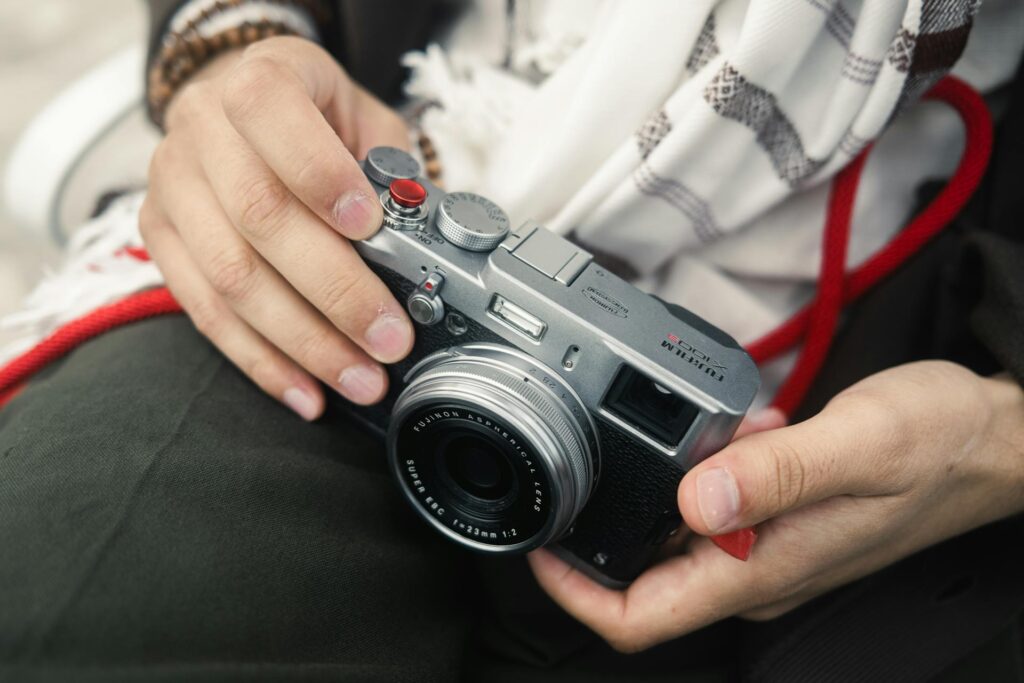
Photo by Ahmed
I tend to have phases where I develop mild obsessions with buying a new camera. The cycle is the same: read and watch reviews, look for deals, don’t buy, ease up for six months, then repeat. This pattern has occurred countless times, and has given me enough data to look in the mirror and say “Your camera is not the problem, you are…”
I’m currently rocking the Fujifilm X-T3 – it’s almost 10 years since its release date. Fujifilm is currently on the X-T5, and there are valid rumors the announcement of the X-T6 isn’t too far away. There’s also the Nikon ZF that’s constantly on my radar, and the wishful fantasy of perhaps owning a Leica Q3 one day.
At times, my X-T3 feels inferior to other options. “How can I call myself a proper photographer if I don’t have the latest gear?” an absurd but genuine question I ask myself.
When I look at the data and analyze what pushes the urge to buy new gear, there’s one common denominator. It’s not a wave of Google Ads, nor is it because the YouTube algorithm recommends gear reviews. The truth is, it’s very little to do with external forces, rather coming from within.
I pine for a new camera when I doubt my ability to create strong photographs.

Self doubt is nothing new. In the almost 13 years I’ve been involved with the industry I’ve had plenty of creative ruts and instances of a lack of self belief. As common as they can be, they’re not pleasant, and sometimes it’s easy to plaster the wound rather than face it straight on.
During these times my brain, looking for comfort, tricks itself that a new camera will get that creative flair back. That’s not true. You can give a person the greatest tools on the planet, but if they’re not confident they can use them, those tools are as redundant as old, worn ones from yesteryear.
Thankfully, something changed in recent months. After a four-year health battle, in which I had to drastically reduce my workload, I’ve begun booking portrait sessions again. Being in creative environments, crafting different projects and getting that little burst of dopamine when your subject says “I love them,” are putting any desire for new gear on the backburner.

Looking at my X-T3, I can still see everything it can give me. I believe it again, or in actual fact I once again believe in me.

Throughout your photography journey, I’m happy to bet you’ll go through at least one moment of self doubt, if you’re lucky. And in those moments you may be tempted to throw cash at the wall in the hope something shiny and new can restore your ability to make good images.
I recommend slowing down in such times. Focus on creating a new project, do something that’s out of your comfort zone and allow self doubt to pass. It will be much more beneficial to your sense of self worth, your belief in your skills, and to your wallet.
Core Technology & Background Analysis
Behind the emotional tug‑of‑war with new gear lies a set of very real technical facts that are easy to overlook when you’re in a rut. The Fujifilm X‑T3, for example, is not just “an old camera”; it’s a 26MP APS‑C mirrorless body with phase‑detect autofocus, 4K video, weather sealing, and excellent color science that still competes with many modern bodies in real‑world shooting. The newer X‑T5 and the rumored X‑T6 will undoubtedly add resolution, sharper autofocus algorithms, and fancier subject‑detection modes, but none of those features magically compose the frame, read the light, or connect with your subject for you. Likewise, bodies like the Nikon Zf and Leica Q3 are technically impressive—full‑frame sensors with great dynamic range, beautiful rendering, and, in Leica’s case, a fixed, razor‑sharp lens—but their biggest impact often isn’t the sensor; it’s the psychology of owning something new and aspirational. That psychological kick is short‑lived if your underlying creative confidence hasn’t been rebuilt. Modern camera “technology” also includes things like face/eye AF, IBIS, and high‑ISO performance, which absolutely help in low light or fast‑paced shoots, yet all of them are multipliers, not creators: they multiply the skill and intention you already have. If your vision, editing workflow, and storytelling muscles are weak, new hardware simply multiplies inconsistency. This is why many photographers produce their best work for years on so‑called “obsolete” cameras—their technical understanding of exposure, timing, posing, and post‑processing far outweighs the marginal gains of the latest spec sheet. In other words, learning to trust and fully exploit the camera you already own is a far more scalable upgrade than chasing every new body that hits the rumor sites.
Deep Configuration Analysis
Looking more closely at the configuration you’re actually using reveals why the urge to upgrade is more emotional than practical. The Fujifilm X‑T3’s sensor and processor combo still deliver clean files for professional use: 26MP is more than enough resolution for large prints, client galleries, social media, and editorial work. That resolution also gives you comfortable latitude to crop without destroying image quality, which is crucial for portraits and street work where reframing in post can rescue a near‑miss composition. Its autofocus, while not the very latest generation, is perfectly capable of locking on to eyes, tracking movement, and handling most real‑world portrait sessions, especially when paired with Fujifilm’s fast primes. For many shooters, the bottleneck isn’t AF speed but hesitation: not pressing the shutter at the right moment, second‑guessing the composition, or overthinking the scene.
From a creative standpoint, the X‑T3’s film simulations and color science are a gift: they allow you to pre‑visualize and commit to a look in camera, which nudges you to think more intentionally about mood and tonality rather than spraying and praying for a “fix it in post” solution. The relatively compact body and lenses make it easy to carry everywhere, which dramatically increases your chances of making meaningful images compared to a heavier system that lives on the shelf. Even the so‑called “limitations” of a slightly older body—less forgiving high‑ISO, less aggressive IBIS, or fewer AF points—can be turned into strengths, forcing you to pay attention to light, timing, and camera stability instead of leaning on technology as a crutch.
When you contrast that with the fantasy bodies on the horizon—the Nikon Zf with its retro charm and strong full‑frame sensor, or the Leica Q3 with its iconic design and fixed 28mm lens—you see a pattern. Yes, they offer better low‑light performance, higher resolution, and premium build quality, but they won’t automatically solve problems like inconsistent posing, weak project ideas, or a lack of shooting discipline. In practice, someone confidently wielding an X‑T3 and a clear project concept will regularly outperform someone with a brand‑new flagship body who isn’t sure what they’re trying to say with their images. The configuration you have today is already powerful enough to support ambitious portrait projects, personal documentaries, and client work; the key upgrade lies in your mindset, not your megapixels.
Buying Guide: Do You Really Need a New Camera?
If you’re wrestling with the same urge to upgrade, it helps to be brutally honest about who you are as a photographer right now and what you actually shoot.
Who this mindset is for
- Portrait and lifestyle photographers who already own a capable mirrorless body (X‑T series, Sony A6xxx/A7 series, Nikon Z, Canon R, etc.) and find themselves endlessly browsing reviews instead of shooting.
- Enthusiast creatives who are bored with their work and assume a new camera will “reignite the spark.”
- Recovering perfectionists who feel they aren’t a “proper photographer” without the latest flagship.
- Anyone returning from a break—whether for health, work, or life reasons—who thinks they must “catch up” on gear before booking sessions again.
When you probably do NOT need to buy
You likely don’t need a new camera if:
- Your current body:
- Shoots RAW and has at least ~20MP.
- Focuses reliably in the types of scenes you actually shoot.
- Offers decent ISO performance up to the ranges you regularly use.
- Your real struggles are:
- Coming up with ideas or projects.
- Feeling confident directing subjects.
- Inconsistent editing and color decisions.
- Lack of practice, not lack of features.
In that case, the best “upgrade path” is:
- Start a focused project (e.g., 10 portraits of local creatives, 30 days of self‑portraits, one neighborhood documentary).
- Limit your gear on purpose (one body, one lens) to deepen your familiarity with your current kit.
- Invest in education (books, workshops, online courses, photo critiques) instead of another body.
When an upgrade might make sense
There are scenarios where new hardware is justified:
- Your camera is physically failing (shutter issues, unreliability on paid jobs).
- You’ve hit a clear technical wall:
- Constantly needing better low‑light AF for fast‑moving subjects (e.g., indoor sports, weddings in dark venues).
- Specific client demands (e.g., high‑res product work that truly needs 40–60MP).
- Your work has evolved in a way your current system genuinely can’t support (e.g., needing top‑tier video specs you simply don’t have).
Even then, treat an upgrade as a tool for a defined purpose, not a cure for self‑doubt. Write down:
- What exact problem your new camera must solve.
- How often that problem actually comes up in your paid or personal work.
- How you’ll measure whether the upgrade was worth it (e.g., keeper rate, client feedback, new types of jobs).
Strategic alternatives if you still want to spend money
If your fingers are itching to swipe the card but you know a full body upgrade isn’t truly necessary, consider:
- A prime lens you’ll actually use (e.g., a fast portrait lens that opens creative possibilities your kit zoom doesn’t).
- Lighting gear (a simple off‑camera flash or continuous light) that massively expands the scenes you can create.
- Education and experiences—portfolio reviews, workshops, mentorships, or personal trips designed around shooting.
These purchases tend to have a direct, visible impact on your images and confidence, whereas a body upgrade often yields marginal, harder‑to‑notice gains if you’re already in a capable ecosystem.
Frequently Asked Questions (FAQ)
Will a newer camera make me a better photographer?
A newer camera can make certain tasks easier—like focusing in low light, shooting faster, or cropping more aggressively—but it doesn’t inherently make you more creative, more observant, or better at connecting with subjects. Those skills come from practice, feedback, and intentional projects. A modern body is a multiplier of the skill you already have, not a replacement for it.
How do I know if I’m just experiencing gear lust (GAS)?
You’re probably dealing with gear acquisition syndrome if:
- You spend more time on review sites and YouTube than actually shooting.
- Your reasons for upgrading are vague (“better image quality,” “newer tech”) rather than tied to a specific, recurring problem.
- Your current camera has features you’ve never fully explored.
If that sounds familiar, pause major purchases and commit to a defined project with your existing gear first.
Is it wrong to want the latest camera?
No. Enjoying tools and design is part of the fun of photography. The key is intent: if you’re buying primarily to feel more legitimate or to escape self‑doubt, the high will be temporary. If you’re buying because you’ve clearly outgrown your current tool for a specific type of work, and you’re already shooting regularly, the upgrade is much easier to justify.
How can I rebuild confidence without buying anything?
A few practical steps:
- Start a small, time‑boxed project (e.g., 10 portraits, 7 days of one‑lens street shooting).
- Seek honest critique from photographers you respect, not just likes on social media.
- Re‑edit older favorites with your current skills—seeing your progress is a powerful confidence boost.
- Schedule shoots that force you slightly out of your comfort zone (a new location, a different type of subject, a tighter time limit).
What should I do when I feel stuck in a creative rut?
Slow down instead of speeding toward the checkout page. Give yourself constraints: one camera, one lens, one idea. Go somewhere new, or photograph something familiar in a different way (e.g., only shoot backlight, only shadows, only reflections). Most importantly, commit to finishing something—a series, a zine, a small online gallery—because completion builds confidence far more reliably than yet another unopened camera box.
In the end, the turning point isn’t when a new model is announced; it’s when you look at the camera in your hands and remember everything it can already do—and everything you’re capable of creating with it.

King
Independent editors covering practical technology, online services and better buying decisions.