Most wildlife photography is easy on the eyes: a colorful bird, perfect crisp light, or an animal framed just right. It is usually a quiet, peaceful moment, the kind of image people pause to look at for a second, and then move on.
The more time I spend observing and documenting wildlife, the more I realize that stopping at “pretty” means missing almost everything that actually matters. For me, photography has become less about capturing something visually appealing and more about helping people understand what they’re actually looking at.
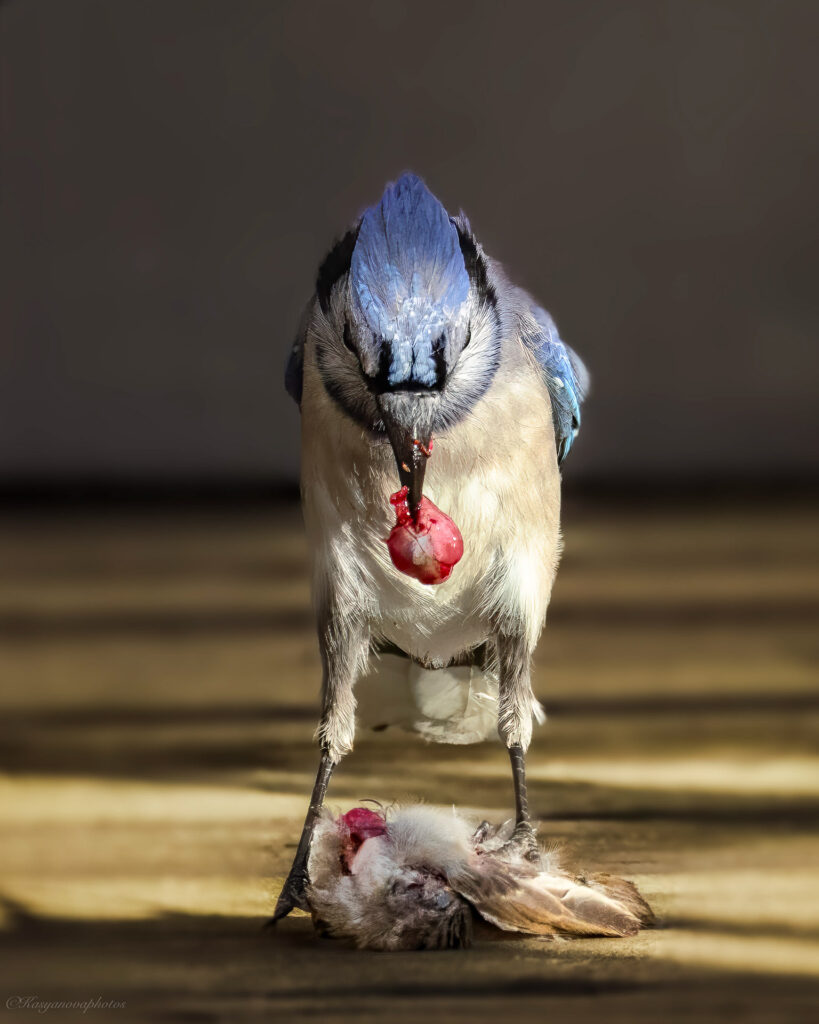
Blue Jay.
This is where that idea starts.
A Blue Jay eating a baby sparrow is not what most people expect to see. It’s uncomfortable. It challenges the idea that nature is always peaceful or beautiful. Many of us immediately try to impose human ideas onto the scene, thinking in terms of fairness or who should live.
But nature doesn’t follow our rules. The Blue Jay eats because they must; survival is all that matters.
We often think of Blue Jays as harmless songbirds, which is what makes this interaction so jarring. In reality, they are opportunistic feeders, and their diet sometimes includes other birds.
Researchers studying Blue Jays found that “a majority of reports involve predation on House Sparrows” (Saenz & Pierce, 2022). Moments like this aren’t exceptions but an intricate part of how nature works.
Looking past that initial reaction matters. When we stop trying to force human meaning onto these moments, we start to understand them for what they are: survival. When we understand that, we start to care about the system as a whole, not just the parts that feel comfortable.
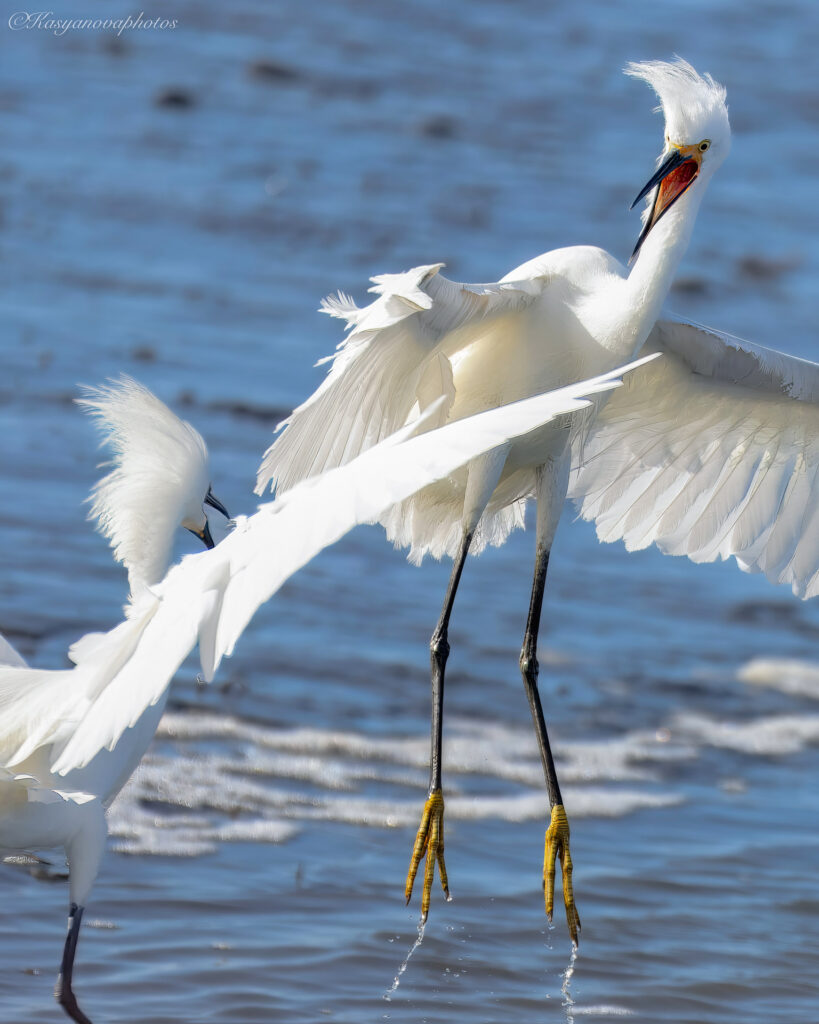
Snowy Egrets fighting.
The intensity doesn’t stop here, but it shifts. This isn’t predator versus prey anymore. This is a competition.
The above Snowy Egrets are fighting for space, access to food, and control over a specific area. In environments where resources are limited, conflict becomes part of survival; it’s not random aggression, it’s a strategy.
This moment shows that struggle exists even within the same species. Survival isn’t just about escaping danger; it depends on navigating others who are trying to do the same.
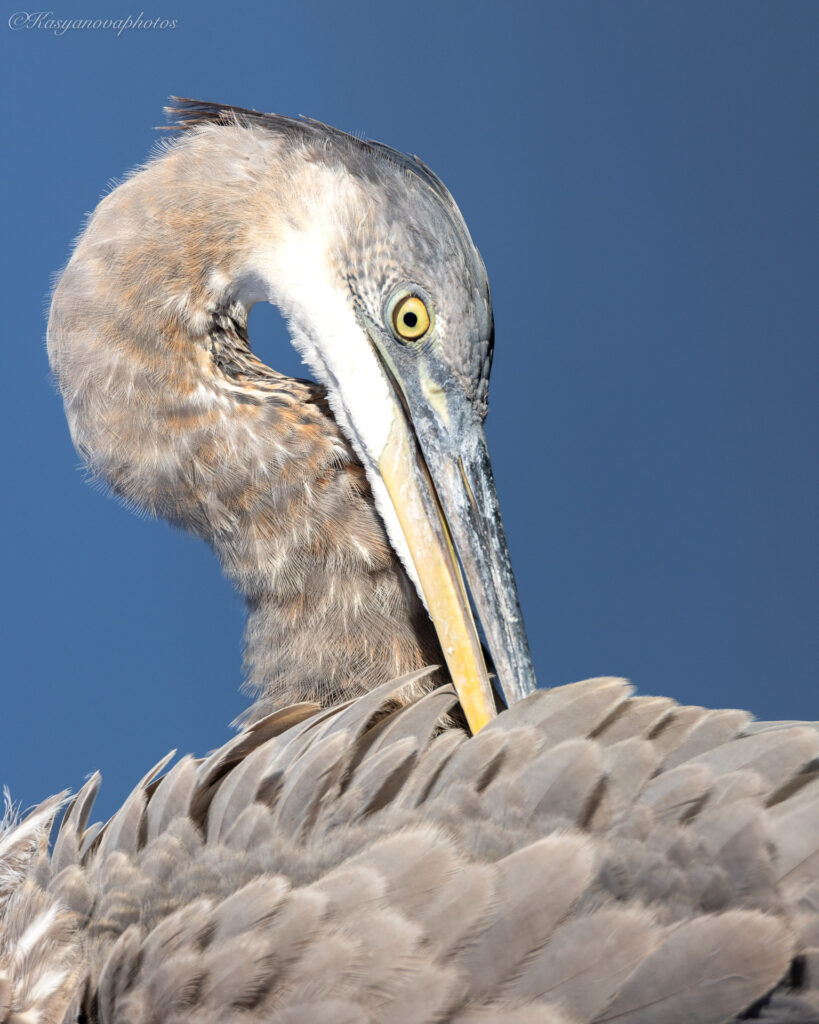
Great Blue Heron preening.
After conflict, there’s this quiet moment of a Heron preening. It’s easy to overlook compared to everything that came before, but it’s just as important.
Preening is survival. Birds rely on their feathers for flight, insulation, and protection. Maintaining them isn’t optional, it’s essential to survival.
There’s this common assumption that animals are “unclean” because they don’t follow human standards, but when you actually watch them, that idea falls apart. So much of their time is spent maintaining themselves, staying functional, and staying alive.
This was something I didn’t always notice. I used to brush past moments like this without giving them much thought. But the more I paid attention, the more I realized how much I was missing, and how important these small, quiet behaviors really are.
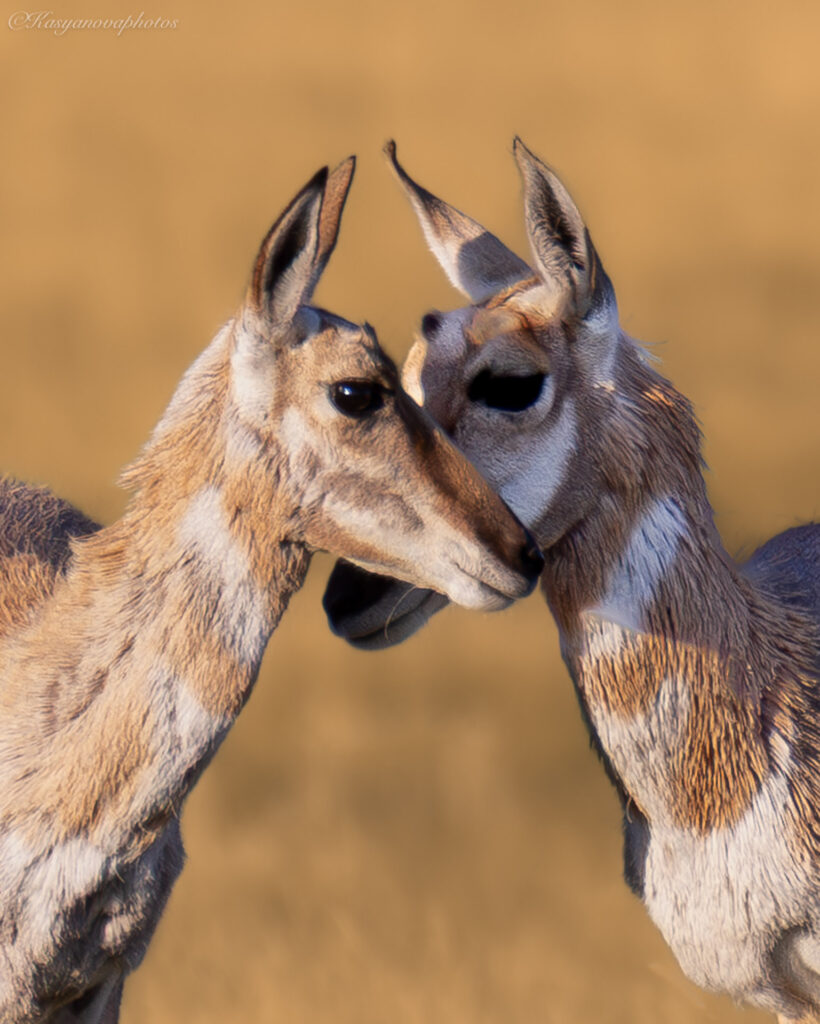
North American Pronghorn.
This is where the story softens.
Two Pronghorn gently touching heads, the stillness of it, the open silence around them, feels like you’ve stepped out of everything that came before. It’s calm and subtle, yet it carries just as much meaning.
“Pronghorns are social animals, gathering in relatively large herds”, and “depend on their eyesight and speed to escape enemies” (Schemnitz, 1994). What a moment like this makes clear is that those instincts don’t disappear when the threat does. Connection is part of the same system. It’s another way of staying aware, and staying alive.
What looks like a simple interaction is actually part of something much bigger.
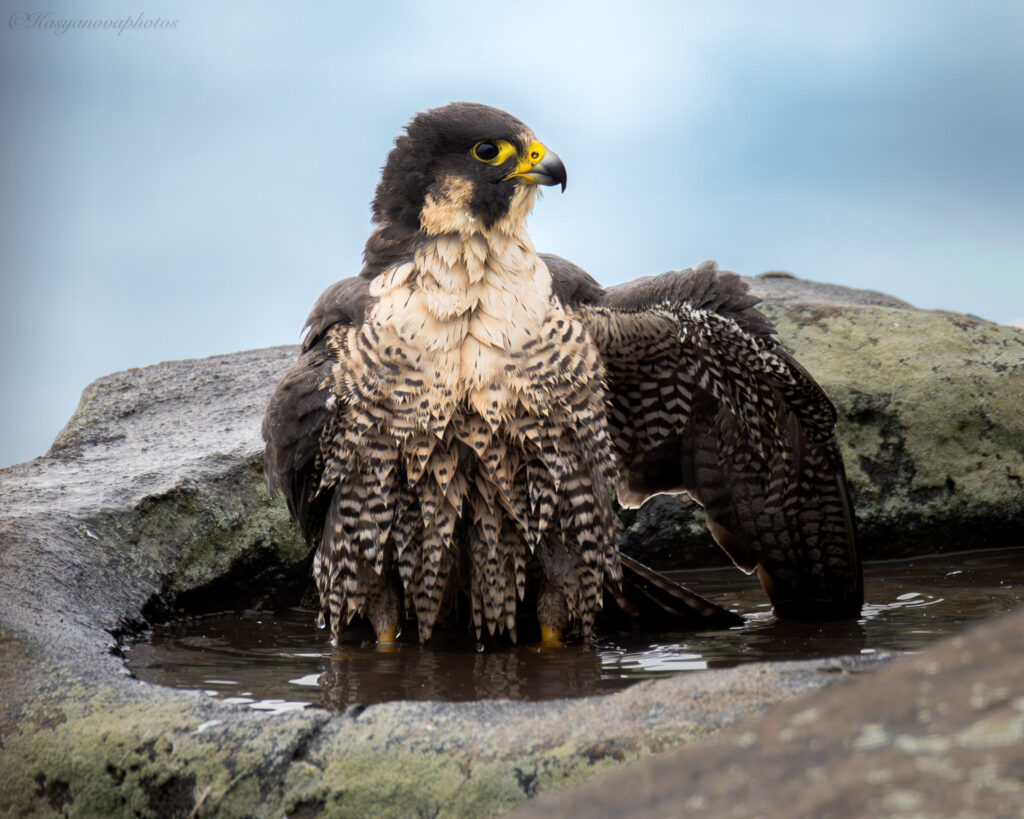
Peregrine Falcon.
Finally, a secret moment tucked away from view, a moment most people would never think to look for.
A Peregrine falcon bathing in a small pool of water tucked into a cliff. What makes this even more interesting is that the water likely wasn’t always there. It existed because of an unusually heavy winter, with snow building up and then melting into temporary pockets.
Without those shifting conditions — that specific winter, that specific cliff face, that specific thaw — this moment simply wouldn’t have existed. It’s the kind of thing you could spend years in the field and never stumble across again.
That’s what makes it important. Weather, landscapes, timing, everything connects. Sometimes those connections create small, rare windows where something like this can happen.
All of these moments are different. Some are intense, some are quiet, some are easy to understand, and some take more time. Yet, they all point to the same idea: wildlife isn’t just something to look at. It’s something to understand.
When we take the time to look deeper, we start to see that every interaction, movement, and behavior is part of a larger system. Most importantly, that system isn’t always separate from us.
Their survival is tied to the same environments we depend on.
The Falcon finds water because a winter was heavy enough to leave some behind. The Pronghorn stay together because the open land gives them nowhere to hide alone. The Blue Jay eats, and moves on. These aren’t distant things, rather, they’re happening in the same landscapes, under the same pressures that shape our lives too.
So, for me, photography is about creating something that makes people pause long enough to see what’s really going on.
It is no longer just a photo once you truly understand it.
Core Technology & Background Analysis
Underneath the emotional impact of these images is a shift in how wildlife photography is “built.” Traditionally, photographers focused on eye-catching compositions: golden-hour light, creamy backgrounds, and charismatic animals looking directly at the camera. That visual style is essentially the “technology stack” of classic wildlife imagery: fast telephoto lenses, high burst rates, and post-processing geared toward drama and perfection.
But the scenes described here—predation, competition, grooming, subtle bonding, and rare behavior triggered by unusual weather—rely on a different foundation:
- Behavioral ecology instead of staged moments
Understanding how species actually behave (Blue Jays as opportunistic predators, Snowy Egrets as territorial, Pronghorn as highly social, Peregrine Falcons exploiting temporary water sources) becomes as important as knowing camera settings. You are not just pointing at an animal; you are documenting ecological processes like predation, competition, self-maintenance, and social bonding. - Fieldcraft over spectacle
To witness a falcon bathing in a temporary cliff pool, you need patience, repeated observation, and a good grasp of how weather, topography, and seasonal change interact. This is similar to moving from “snapshot” photography to a data-driven, long-term field study. You’re learning where animals move, when they feel safe enough to preen or bathe, and how they respond to scarcity or abundance. - Ethology as the real “sharpness”
Most viewers are used to judging photos by technical sharpness and saturated color. But what really matters in images like these is behavioral sharpness—how accurately the photograph captures a moment that tells the truth about the animal’s life. A slightly imperfect frame of a Blue Jay predating a sparrow can be more valuable than a technically flawless but empty portrait, because it reveals how the bird actually survives. - Context as the missing metadata
Classic wildlife photos often strip away context: no hint of conflict, no sign of habitat degradation, no evidence of climate anomalies. Here, context is front and center. The heavy winter that creates the Falcon’s bath, the open landscape that shapes Pronghorn behavior, the crowded feeding grounds that push Egrets into conflict—all of this is ecological metadata. Without it, we misread the image. - Ethics and honesty
A big part of why “most wildlife photography is lying to you” is not malicious deception but selection bias: photographers and platforms overwhelmingly favor cute, peaceful, or heroic moments. By deliberately including uncomfortable scenes—predation, fighting, raw maintenance—the photographer is adjusting that bias, treating the camera less as a tool for decoration and more as a tool for documentation.
In other words, the “core technology” of this kind of wildlife work is not a new lens or camera body; it is a new mindset. You combine aesthetic skill with natural history, scientific curiosity, and a willingness to show viewers what nature really looks like, even when it contradicts our comforting stories.
Deep Configuration Analysis
Instead of CPU cores and RAM, this story’s “configuration” is made of behavioral layers and narrative choices. Each animal and scenario adds a different capability to the overall message.
Blue Jay: Predation and Cognitive Dissonance
The Blue Jay eating a baby sparrow is like the “hard truth module” in this configuration. It forces the viewer to confront:
- Cognitive dissonance between the bird’s reputation (a charming backyard songbird) and its real behavior (a predator of nestlings in some contexts).
- Ecological function: predation on House Sparrows, an abundant and often invasive species, can be part of balancing local bird communities, not just “cruelty.”
- Human projection: we reflexively think in terms of villains and victims, but in ecological terms, the Jay is simply doing what allows it to persist.
Analytically, this image performs the role of resetting expectations. It breaks the illusion that wildlife equals serenity.
Snowy Egrets: Intraspecific Competition
The fighting Snowy Egrets layer in a second behavior type: competition within the same species.
Configuration-wise, this scene:
- Shows resource-driven conflict—space, food, nest sites.
- Demonstrates that “violence” is not random; it is a strategy in crowded or resource-poor conditions.
- Reminds us that survival is not only about escaping predators but also about outmaneuvering peers.
This is the “conflict resolution engine” of the narrative: it broadens survival from predator–prey interactions to include social and territorial pressure.
Great Blue Heron: Maintenance and Invisible Work
The preening Heron is the “background process” most viewers don’t even notice, yet it’s critical.
From a configuration standpoint:
- Preening equals maintenance: like regularly updating and patching a system, birds must keep feathers clean, aligned, and waterproof to fly efficiently and insulate properly.
- Time allocation: a huge portion of animal life is spent on these “boring” tasks—grooming, feeding, resting. Ignoring them gives us a distorted idea of what life in the wild actually is.
This image supports the system’s stability. Without grooming, the dramatic chase, escape, or fight scenes wouldn’t be possible in the first place.
Pronghorn: Social Structure and Soft Connection
The Pronghorn interaction introduces social bonding and subtle communication.
This behavior:
- Reflects herd-based survival: staying in groups increases vigilance and reduces individual risk.
- Shows that calm, gentle contact is not separate from survival—it is part of information exchange, trust-building, and coordination within a herd.
- Highlights that “soft” behaviors often encode critical data: who is dominant, who is familiar, who is safe to be near.
Within the configuration, this moment acts as the cohesion layer—the part that keeps the system from fragmenting under constant threat and competition.
Peregrine Falcon: Rarity, Weather, and Chance
The Peregrine Falcon bathing in a temporary cliff pool is the “rare-event handler” in this narrative stack.
It illustrates:
- Micro-habitats created by macro-conditions: an unusually heavy winter leads to snow build-up, which later melts into a fleeting water source.
- Behavioral opportunism: the Falcon uses this short-lived resource for bathing, a behavior that’s easy to miss because it’s both brief and hidden.
- Non-repeatability: you could spend years in the same area and never see this exact configuration again—this is the wildlife equivalent of a once-in-a-lifetime bug or perfect alignment.
This final behavior emphasizes emergence: how weather, landscape, timing, and animal decision-making combine into moments that no one can script.
Put together, these scenes form a complete configuration of wildlife reality:
- Harsh (predation),
- Competitive (territorial fights),
- Routine yet essential (preening),
- Social and subtle (Pronghorn contact),
- Rare and emergent (Falcon bathing).
The power of the photography comes from not isolating any one of these, but letting them coexist in the same story.
Buying Guide: Who Is This Kind of Wildlife Photography For?
This article isn’t selling a camera body or lens, but it is pointing toward a different way of doing wildlife photography. If you’re wondering whether this deeper, more honest approach is for you, think about where you fit:
1. Curious Beginners Who Want More Than Instagram
If you’re just starting out and you’re already questioning why every wildlife image you see looks the same—perfect, pretty, and strangely emotionless—this approach is a good fit. It will push you to:
- Spend more time observing behavior rather than chasing likes.
- Accept “imperfect” images that tell a stronger story.
- Learn basic natural history about the species you photograph.
You don’t need top-tier gear for this; you need time, patience, and a willingness to be uncomfortable.
2. Nature Lovers and Birders Who Want to Document Truthfully
If you already love watching birds or mammals in the field, shifting toward this style of photography helps you:
- Record behaviors that matter to science and conservation (predation, conflict, habitat use, responses to extreme weather).
- Create images that educate friends, family, or followers about how nature actually works, not just how it looks during sunset.
You’re the ideal person to blur the line between “hobby photographer” and “citizen scientist.”
3. Conservation Communicators and Educators
For guides, educators, and conservation storytellers, this approach is almost essential:
- It gives you visual evidence to talk about ecosystem processes, not just species names.
- It helps audiences understand why habitat, climate, and resource availability matter.
- It shifts focus from “cute animals to protect” to “complex systems we all depend on.”
If your goal is to change minds, this type of photography is a powerful tool.
4. Photographers Bored With Perfect, Safe Images
If you already have sharp portraits, well-lit action shots, and textbook compositions, but feel like something is missing, this is your next step:
- Start intentionally seeking behaviors: feeding, fighting, courting, caring for young, grooming, resting, exploring.
- Learn the rhythms of a place instead of dropping in for a single session.
- Allow yourself to keep and share images that are emotionally difficult but ecologically honest.
Frequently Asked Questions (FAQ)
1. Why say “most wildlife photography is lying”? Isn’t that too harsh?
It’s less about deliberate deceit and more about selection bias. Platforms and audiences overwhelmingly reward pretty, peaceful, and flattering moments. Predation, conflict, injury, starvation, or habitat loss rarely make it into curated feeds. The result is a heavily edited version of nature that feels real but isn’t representative.
2. Is it ethical to photograph predation or animal conflict?
Yes—if you keep your distance and do not interfere. Predation and fighting are core parts of how ecosystems function. Documenting them honestly can deepen public understanding. What’s unethical is staging scenes, baiting animals, or stressing them just to “get the shot.”
3. Why focus so much on “ordinary” behaviors like preening or standing together?
Because those behaviors are not ordinary at all when you think in survival terms. Preening keeps feathers flight-ready and waterproof. Gentle head contact between Pronghorn reflects social bonds, hierarchy, and coordinated vigilance. These moments are foundational to an animal’s ability to handle the more dramatic events we like to photograph.
4. How can I start seeing and capturing these deeper moments?
- Spend more time with fewer species or locations.
- Read basic field guides or behavioral notes for the animals you’re interested in.
- Watch before you shoot: note patterns—what an animal does after feeding, when it rests, how it reacts to changes in light, weather, or human presence.
- Accept that many important moments will be subtle, fast, and imperfectly framed. Keep shooting anyway.
5. Isn’t this kind of photography depressing?
It can be uncomfortable, especially at first. Watching a baby sparrow being eaten is not easy. But many people find that, over time, honesty feels more satisfying than constant sugar-coating. You begin to see resilience, adaptation, connection, and beauty in places you previously ignored. The result is not hopelessness—it’s a deeper respect for how life persists under constant pressure.
When wildlife photography grows past the polished postcard, it becomes something closer to fieldwork, storytelling, and witness. Once you’ve seen what’s really happening in front of the lens, it is no longer just a photo—it’s a fragment of truth about a living system you are also part of.

King
Independent editors covering practical technology, online services and better buying decisions.