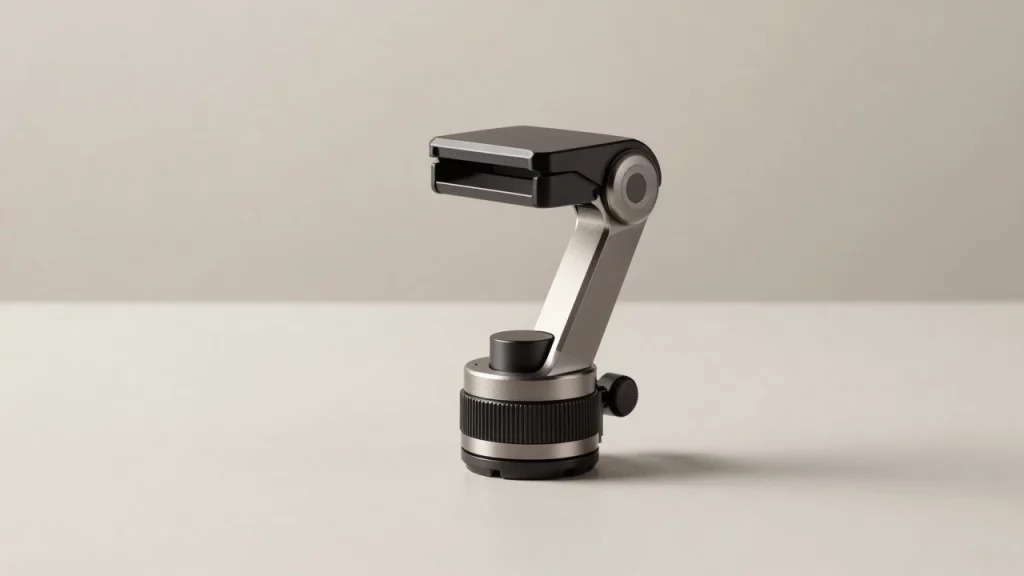
Peak Design has spent years quietly rethinking how camera accessories should look, feel, and function. If you’ve been around photography gear for a while, you’ve almost certainly come across their bags, straps, and clips. Now they’ve turned their attention to one of the most stubborn, slow-moving categories in the industry: the travel tripod.
In this hands-on review, I’ll walk you through what makes the Peak Design Travel Tripod stand out, how it performs in the field, and whether the carbon fiber version is worth the extra spend over aluminum. By the end, you’ll have a clear sense of whether this tripod belongs in your camera bag.
A Travel Tripod Built From Scratch
Most “new” travel tripods are just rebadged versions of the same generic design. Peak Design didn’t go that route. They redesigned the travel tripod from the ground up, and the result is something I genuinely hadn’t seen before.
Peak Design Travel Tripod 
Revolutionary design with thoughtful, well-implemented features. Best all-round travel tripod — highly recommended.
I’ll be honest: when I heard another travel tripod was on its way for review, I groaned. I’ve broken more cheap tripods than I care to count. Travel tripods in particular tend to be too short, too wobbly, and not even all that light. Most brands seem to think “travel” only refers to collapsed length — but a tripod that’s wobbly or stops at chest height is no friend on a hike.
So was I wrong to roll my eyes at yet another tiny travel tripod? Yes. Very wrong.
How I Review a Tripod
Pros
- Compact, space-saving leg geometry
- Excellent build quality
- Hidden mobile phone mount
- Ingenious integrated ball head
- Fast deployment
- Rigid and strong under load
Cons
- Premium price
- Could be a touch lighter
A tripod review sounds simple — does it work? — but a tripod that feels solid in the store can fail catastrophically a year later. And “catastrophic failure” is the last phrase you want to hear when your camera and lens are involved.

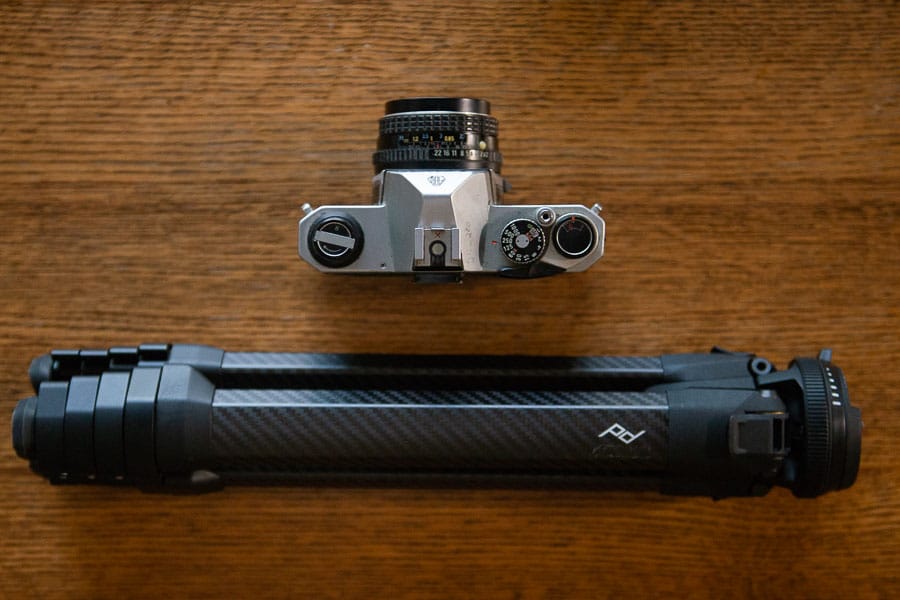
The Peak Design Travel Tripod is barely longer than a full-frame DSLR with lens, yet it can hold one steady with ease.
Here are the four criteria I rely on:
- Leg locks and center column joints — do they stay tight over time?
- Overall stiffness — how indestructible does the tripod feel?
- Size — height, weight, and real-world portability
- Value — does the price match the long-term performance?
Quick specs:
- Price: $599.95 (carbon fiber) / $349.95 (aluminum)
- Max height: 60″ (152 cm)
- Min height: 5.5″ (14 cm)
- Folded length: 15.5″ (39 cm)
- Max load: 20 lbs (9.1 kg)
Build Quality

The carbon fiber version looks the part — and there’s substance to back it up.
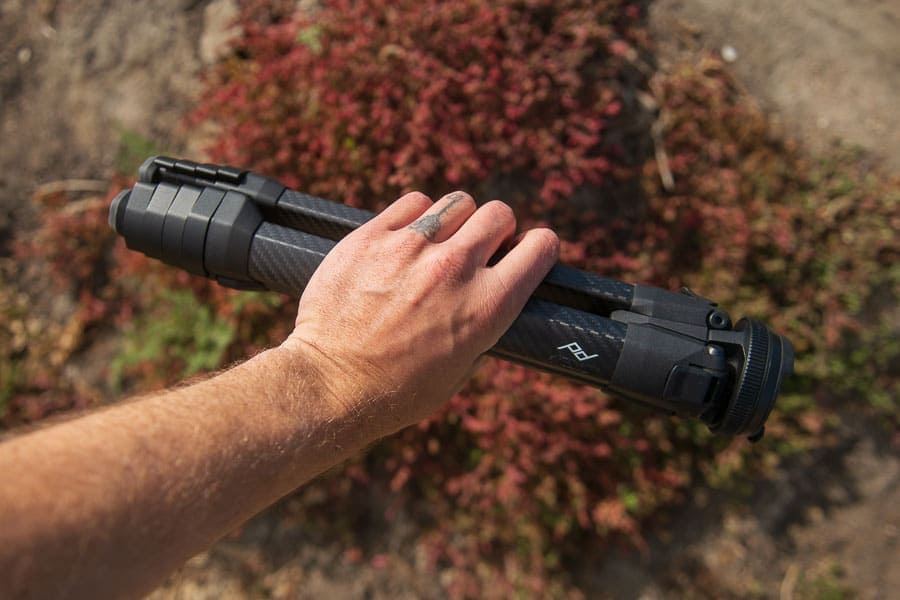
The first thing you notice is how dense and confident the Travel Tripod feels in hand. There’s almost no empty space between the legs or under the head, which is the secret behind its compactness. Despite that solid feel, the whole package weighs in at around 3.5 lbs (1.5 kg) with the head — comfortably in lightweight territory for a tripod that extends this tall.
Could you find a sub-2 lb tripod elsewhere? Sure, but most of them sacrifice stiffness, height, or longevity. The Peak Design Travel Tripod strikes a rare balance between compact, lightweight, and genuinely strong.
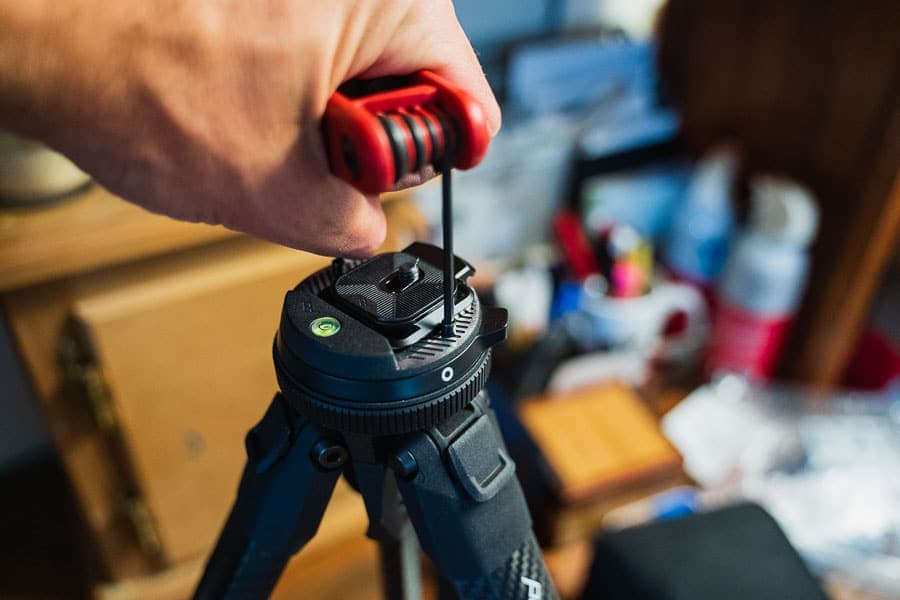
Because I use a variety of tripod plates, I removed the safety pins with the included Allen key — hidden in a secret pocket on the bag.
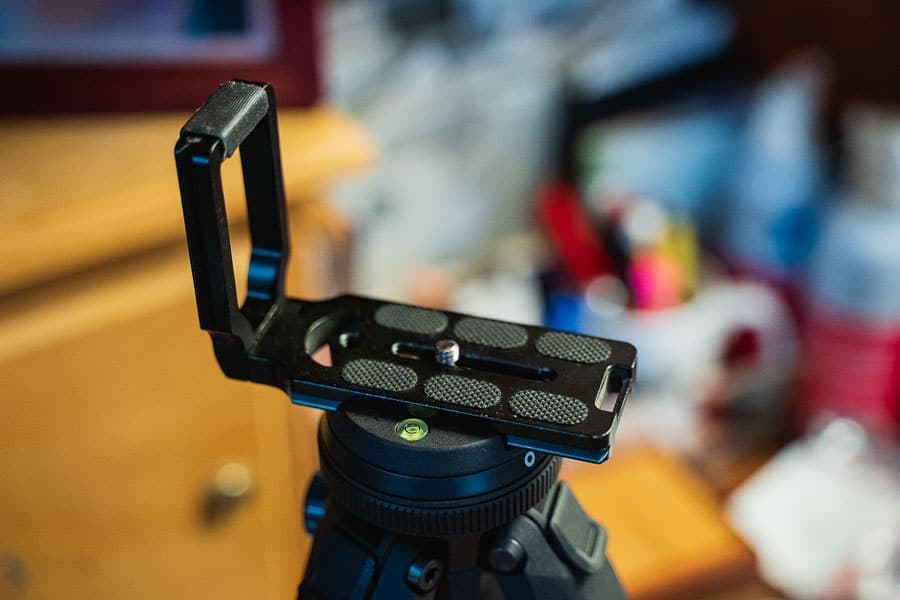
With the pins out, the head accepts a wider range of Arca-Swiss plates and L-brackets.
Materials and machining feel a clear cut above the no-name brands that recycle the same generic legs and ball head. This tripod was reimagined from the ground up.
Tripod Height: Tiny, but Surprisingly Tall

Max height with the center column extended: 60″. Min height with the column removed: about 4″.
A common mistake new photographers make is buying a travel tripod that’s too short to use comfortably. Hunching over the viewfinder for hours is bad for your back and bad for your photos.
The Peak Design Travel Tripod folds down to just 15.4″ (39 cm) but extends to 60″ (150 cm), which is impressive given its packed size. At 6’2″ (188 cm), I still need to lean in slightly for an eye-level shot — but with most modern cameras offering articulating screens, that’s rarely an issue.
The lowest height of about 4″ is possible with the center column removed using the included Allen key.
The one thing I miss is a middle leg-angle setting. Most tripods offer three; this one effectively offers two (standard and fully splayed). It’s not a deal-breaker, but be cautious leaving the camera unattended in strong wind at the wider angle.
Leg Locks and Joints
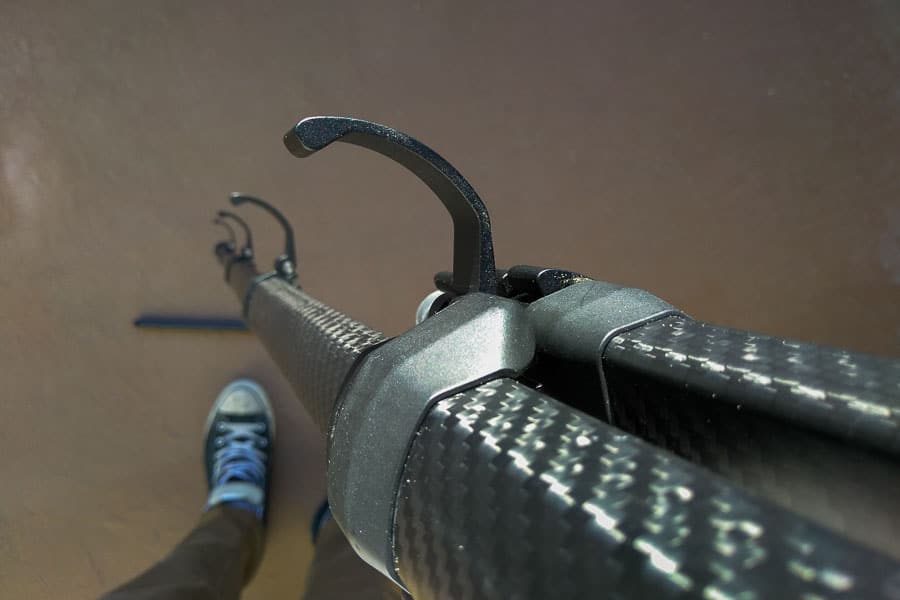
The lever locks look claw-like, but they’re easy to grip — even with cold or gloved hands.
Five leg sections per leg means four locks per leg, and they’re lever-locks rather than twist-locks. As a landscape shooter who lives on a tripod, that combination usually worries me.
In practice, though, these are some of the stiffest legs I’ve used, and the locks are tight, fast, and easy to operate. You can flip all four open at once with one squeeze when the legs are collapsed, which dramatically speeds up setup. Each lock also has an Allen-key tightening screw — something missing on many lever-lock tripods.
The big design win here is how flush everything sits. There are no protruding knobs, even on the Arca-style clamp, which is a major reason the tripod packs so small.
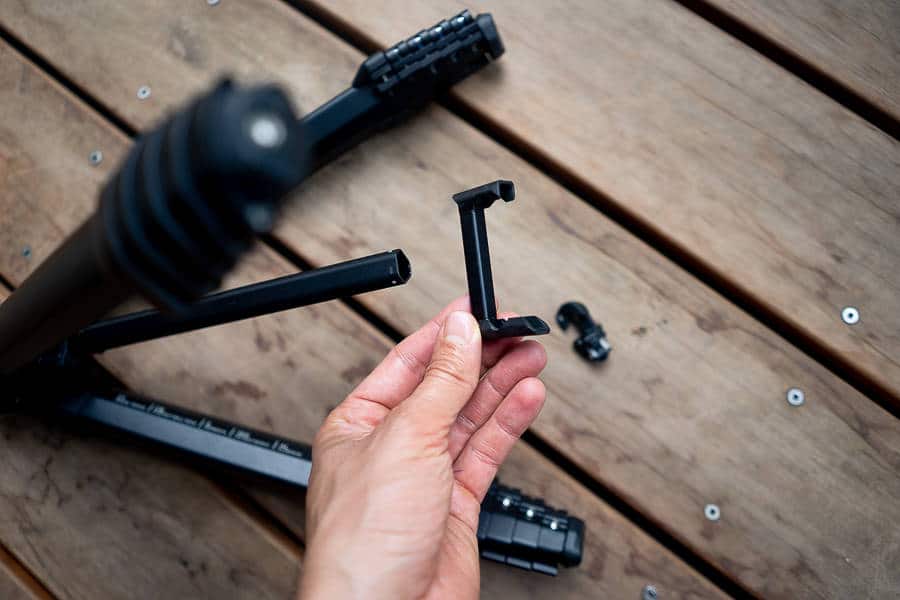
A clever smartphone mount lives inside the center column.
Tucked inside the center column is a fold-out smartphone clamp, magnetically secured when stored. It’s perfect for quick selfies, time-lapses, or sharing a long exposure to social media without breaking out a separate phone tripod. Twist the hook, pull out the clamp, snap it onto the ball head — done.
The Ball Head

Is the ball head the center column, or vice versa? They’re effectively the same component.
This is the most unusual — and arguably most ingenious — part of the tripod. Peak Design has thrown out the old “buy legs and head separately” model. The center column doubles as the head, capped with a ball, and the clamp sits flush right on top. When everything collapses, the clamp drops into the leg cluster, leaving zero wasted space.
So how does it actually perform? The clamp grips a full-frame DSLR with a pro f/2.8 zoom confidently — you just have to crank the lock down firmly when you’re approaching the 20 lb (9.1 kg) limit. Mirrorless and crop-sensor setups feel completely planted.
The trade-off: there’s no dedicated panning knob, and the triangular center column means you can’t fake one by loosening the column slightly. For panoramas, you’ll want a separate panning base on top of the clamp. For everything else, it’s a small price to pay for such a compact, stable platform.
Real-World Performance
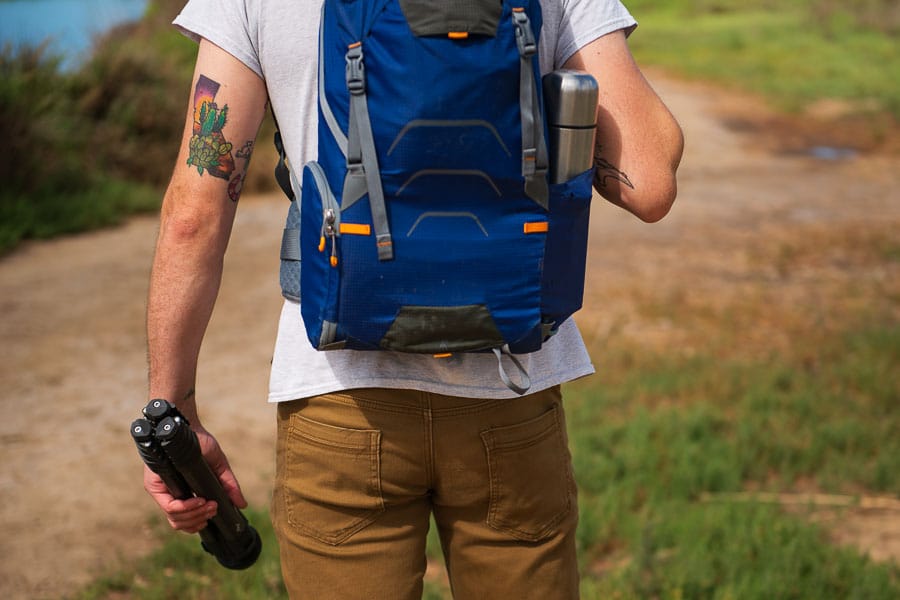
Slimmer and lighter than my coffee thermos.
The real test of a tripod is whether it produces sharp images at slow shutter speeds. With long exposures down to several seconds — sunset seascapes, low-light cityscapes, and night sky shots — the Travel Tripod consistently delivered crisp results, even with a heavy zoom mounted up top.
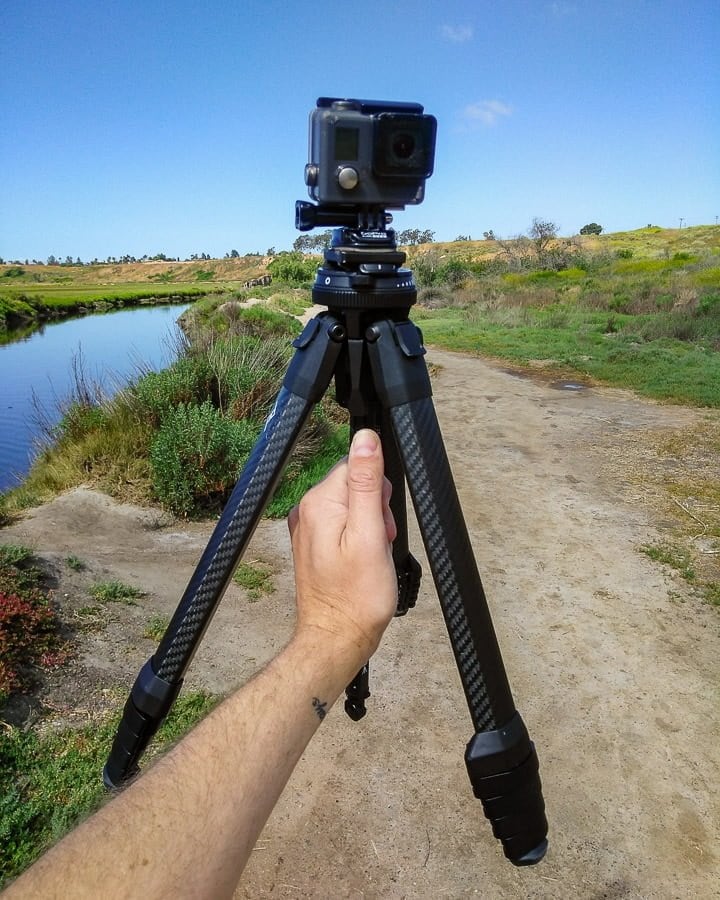
Bonus: it doubles as a “battery-free gimbal” for GoPro vlogging.
The locking action of the clamp can shift composition slightly if you’re not careful — more so than a traditional ball head — but it’s surprisingly close to “set and forget.” A quick tip: frame about 1–2% wider than your final composition so you have room to crop if the lockdown nudges things.
Carbon Fiber vs. Aluminum: Which Should You Buy?
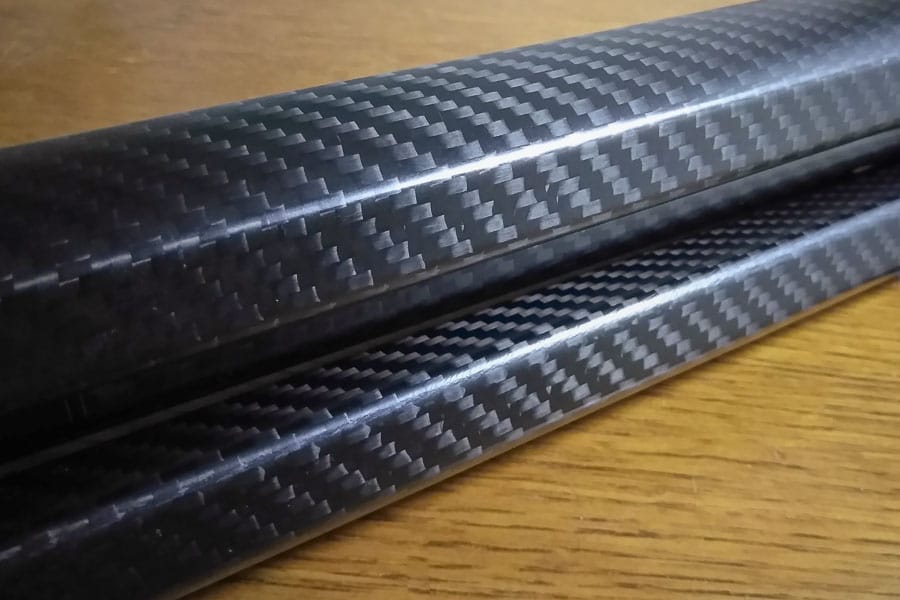
Carbon fiber looks gorgeous — but there’s more to it than aesthetics.
The carbon fiber version costs $599.95; the aluminum is $349.95. Both are pricey compared with budget tripods, but those budget options often break within a year. This one is built to last.
Weight-wise, the gap isn’t huge — 2.81 lbs (1.27 kg) for carbon vs. 3.44 lbs (1.56 kg) for aluminum. But carbon fiber brings more than weight savings:
- Stiffness: Carbon fiber is stiffer than aluminum, which translates to sharper images with heavier setups.
- Vibration damping: In light wind or with super-telephoto lenses, carbon fiber settles more quickly, helping you nail sharp shots using a 2- or 3-second self-timer delay.
- Cold-weather comfort: Carbon legs feel far warmer in your hands than aluminum, even through thin gloves.
Left: Slik 700DX heavy-duty tripod. Center: Peak Design Travel Tripod. Right: Manfrotto tabletop tripod.
If you shoot casually with a lightweight mirrorless body and a prime, aluminum is plenty. If you push your tripod hard — long telephotos, windy conditions, cold environments — save up for carbon.
A favorite backpacking tripod (the discontinued Slik 614 CF, ~2.1 lbs) is noticeably bulkier than the Peak Design Travel Tripod, less stiff, and only marginally taller.
If absolute minimum weight matters more than anything else, true ultralight options exist (such as the Slik Sprint and Lite series — see my full camera tripod guide), but you’ll trade off rigidity and durability.
Get an exclusive Peak Design x Shotkit Discount Code:
Learn more
Practical Tips for Getting the Most From This Tripod
- Always extend the thicker leg sections first. This keeps the base as stiff as possible.
- Use the center column hook. Hang your camera bag from it in windy conditions for extra stability.
- Engage your camera’s 2-second self-timer or remote release for any exposure longer than 1/30 sec to eliminate shutter-button shake.
- Remove the safety pins with the included Allen key if you use third-party Arca-Swiss plates or L-brackets.
- Frame slightly wide. The clamp lockdown can nudge your composition; a small safety margin prevents reshoots.
- Wipe and dry the legs after shooting near saltwater or sand to keep the locks running smoothly.
Final Thoughts
Yes, that’s a 15″ MacBook Pro for scale. The Peak Design Travel Tripod really is that small.
This is the best compact travel tripod I’ve used, especially when bag space is at a premium. Nothing else is this low-profile while still being this strong, this tall, and this fast to deploy. There are still moments — say, hauling multiple tripods up a mountain — when I reach for a sub-2 lb option, but for anyone traveling with a single tripod, this is a top-tier choice.
It’s not just for travel, either. The compact form makes it the kind of tripod you’ll actually bring with you, which is exactly the tripod that ends up paying for itself.
If the carbon fiber version is out of reach, the aluminum model delivers nearly all of the experience for almost half the price. Either way, this is now my go-to ultra-portable travel tripod.
Highly Recommended
Peak Design Travel Tripod
FAQ
Is the Peak Design Travel Tripod worth the price?
For most serious photographers, yes. You’re paying for a unique, space-saving design that holds full-frame cameras steady, packs down smaller than nearly any competitor, and is built to last for years. Cheaper tripods often need replacing within a year or two, so the long-term cost can actually favor Peak Design.
Should I buy the carbon fiber or aluminum version?
Choose carbon fiber if you shoot in cold weather, use heavier telephoto lenses, or want maximum vibration damping for sharp long exposures. Aluminum is the smart pick for casual users with mirrorless or crop-sensor systems who want most of the performance at a lower price.
Can I use third-party Arca-Swiss plates with the Peak Design ball head?
Most standard Arca-Swiss plates work fine. For longer plates, L-brackets, or star trackers, you can remove the small safety pins on the clamp using the included Allen key, which is tucked into a hidden pocket on the carry bag.
Can the Peak Design Travel Tripod shoot panoramas?
Not natively, because the integrated ball head doesn’t include a dedicated panning base. The simple workaround is to add a small Arca-Swiss panning base between the clamp and your camera plate. It adds a small amount of height but gives you smooth horizontal rotation for stitched panoramas.
Is this tripod tall enough for a tall photographer?
At a maximum height of 60″ (152 cm), it works comfortably for most users. If you’re over 6’0″ (183 cm), you may need to lean in slightly for eye-level viewfinder shots — but with today’s articulating LCDs and tilt screens, that’s rarely a real issue in the field.

King
Independent editors covering practical technology, online services and better buying decisions.