Singapore’s transformation from a small island nation into a global architectural marvel stands as one of the most compelling narratives in contemporary urban planning. The city-state’s commitment to integrating nature within its urban fabric has transcended mere aesthetic ambition, evolving into a comprehensive philosophy that challenges conventional notions of metropolitan development. Through groundbreaking projects that seamlessly merge cutting-edge engineering with ecological consciousness, Singapore has established itself as the definitive model for sustainable urbanism in the 21st century, demonstrating that density and nature need not exist in opposition but can instead form a symbiotic relationship that enhances both human experience and environmental health.
The Vertical Forest Revolution
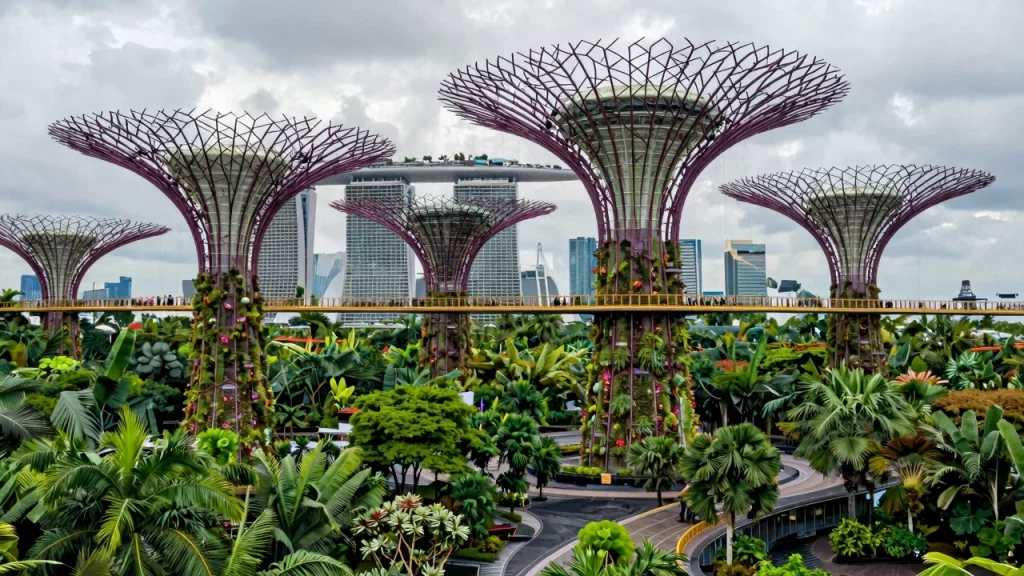
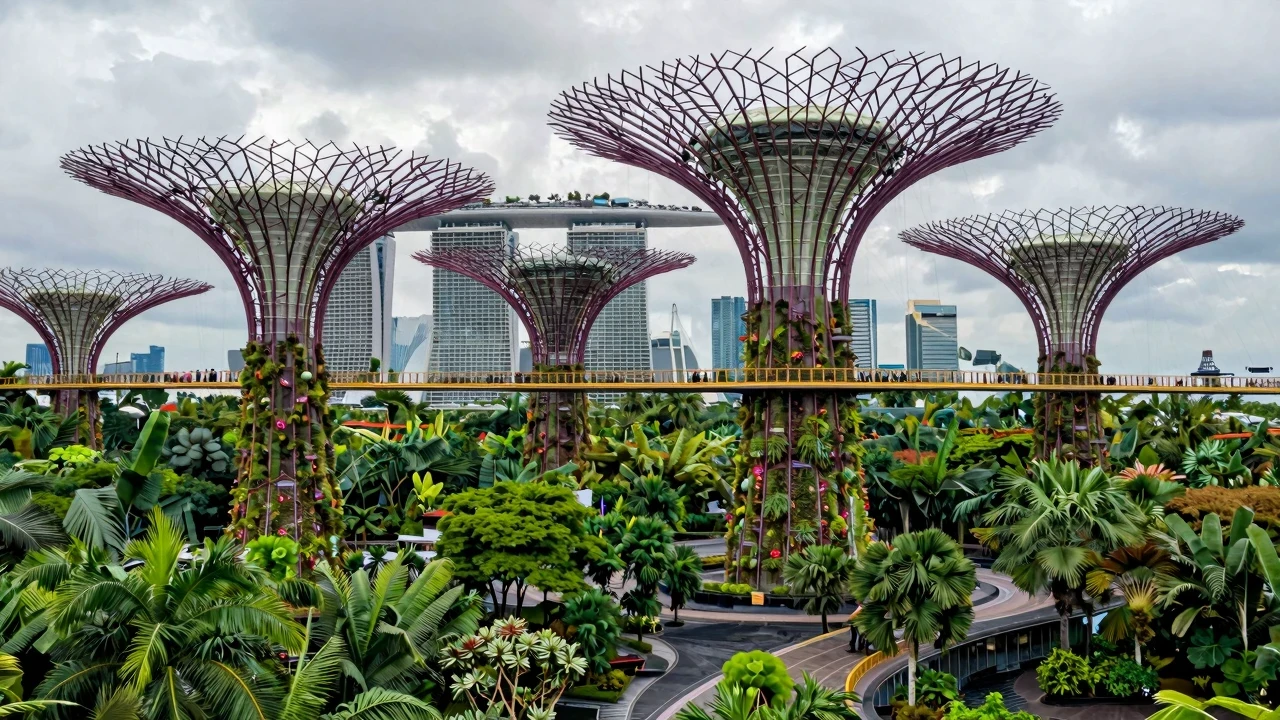
The concept of biophilic design reaches its zenith in Singapore’s approach to vertical greenery, where buildings are not simply constructed within nature but are conceived as living ecosystems themselves. Gardens by the Bay exemplifies this revolutionary thinking through its iconic Supertrees, which function simultaneously as vertical gardens, environmental engines, and architectural sculptures. These structures, ranging from 25 to 50 meters in height, are far more than decorative installations; they represent a sophisticated integration of photovoltaic cells, rainwater collection systems, and air intake functions that contribute to the cooling of the conservatories below. The engineering complexity behind these seemingly organic forms involves intricate steel frameworks that support over 162,900 plants from more than 200 species, creating microclimates that reduce ambient temperatures while providing habitats for birds and insects, thereby reestablishing ecological corridors within the urban environment.
The Interlace residential complex pushes this vertical forest concept into the realm of residential architecture, challenging the traditional tower typology that has dominated urban housing for decades. Designed by OMA and Ole Scheeren, this development comprises 31 apartment blocks stacked in hexagonal arrangements, creating a three-dimensional lattice that maximizes green space, natural ventilation, and community interaction. The architectural innovation lies not merely in its striking geometric configuration but in its fundamental reconceptualization of high-density living, where each unit maintains visual and physical connections to landscaped courtyards, sky gardens, and communal terraces. This approach increases green space by 112% compared to conventional tower developments of equivalent density, demonstrating that sustainable design can enhance rather than compromise residential quality, while the strategic orientation of blocks optimizes natural airflow and reduces reliance on mechanical cooling systems by up to 30%.
Sustainable Landmarks of Marina Bay
Marina Bay Sands, while often celebrated for its dramatic rooftop infinity pool and distinctive three-tower design, represents a more nuanced achievement in sustainable luxury development. The integrated resort incorporates numerous environmental technologies that belie its opulent appearance, including a comprehensive building management system that monitors and optimizes energy consumption across its 2.5 million square feet of space. The development’s commitment to sustainability extends to its water management systems, which recycle and treat wastewater for use in cooling towers and irrigation, reducing potable water consumption by approximately 30 million liters annually. Furthermore, the property’s extensive use of natural lighting through strategically positioned skylights and glass facades minimizes artificial lighting requirements during daylight hours, while the thermal mass of its concrete structure provides passive cooling that reduces peak energy demand.
The adjacent Gardens by the Bay complex elevates sustainable architecture to an unprecedented scale through its Cloud Forest and Flower Dome conservatories, which maintain distinct microclimates while achieving remarkable energy efficiency. The Cloud Forest, replicating conditions found at elevations between 1,000 and 3,000 meters, utilizes a sophisticated climate control system that recovers waste heat from the Supertrees’ photovoltaic systems and employs a closed-loop water circulation that captures condensation for reuse. The engineering achievement becomes particularly evident when considering that these conservatories maintain temperatures between 23 and 25 degrees Celsius in a tropical climate where external temperatures regularly exceed 30 degrees, yet consume 30% less energy than conventional climate-controlled structures of comparable size. This efficiency results from the innovative use of lightweight ETFE (ethylene tetrafluoroethylene) cushions for the roof structure, which provide superior insulation while admitting optimal light levels for plant growth, alongside a comprehensive shading system that responds dynamically to solar intensity throughout the day.
Jewel Changi: Where Infrastructure Meets Ecosystem
Jewel Changi Airport represents perhaps the most ambitious synthesis of transportation infrastructure and biophilic design ever attempted, transforming the typically sterile airport environment into a destination that celebrates nature while serving functional requirements. The development’s centerpiece, the Rain Vortex, stands as the world’s tallest indoor waterfall at 40 meters, but its significance extends far beyond spectacle; the waterfall functions as a sophisticated rainwater harvesting and cooling system that collects precipitation from the building’s distinctive toroidal glass roof, channeling it through a central oculus that creates a natural air circulation pattern reducing the need for mechanical ventilation. The engineering complexity of supporting a five-story garden within an airport environment, complete with over 2,000 trees and 100,000 shrubs, required innovative structural solutions including a diagrid steel and glass framework that distributes loads while maximizing transparency and natural light penetration.
The Shiseido Forest Valley, occupying Jewel’s core, demonstrates how interior landscaping can achieve ecological functions typically associated with outdoor environments, including air purification, humidity regulation, and psychological benefits for travelers experiencing the stress of modern air travel. The careful selection of plant species considers not only aesthetic qualities but also their capacity to thrive under controlled lighting conditions while contributing to air quality improvement through natural filtration processes. This integration of living systems within a high-traffic commercial environment required extensive research into plant resilience, irrigation systems that prevent water damage to surrounding retail spaces, and maintenance protocols that ensure consistent presentation without disrupting airport operations, establishing new standards for how transportation hubs might evolve beyond purely functional spaces into restorative environments that enhance passenger wellbeing.
Conclusion: The Legacy of Integration
Singapore’s architectural achievements represent more than isolated examples of innovative design; they constitute a comprehensive reimagining of urban possibility that challenges cities worldwide to reconsider the relationship between built environment and natural systems. The success of these projects demonstrates that sustainability and aesthetic excellence need not exist in tension, that density can coexist with abundant greenery, and that engineering sophistication can serve ecological restoration rather than environmental degradation. As climate change intensifies and urban populations continue to grow, Singapore’s model offers not merely inspiration but practical methodologies for creating cities that function as integrated ecosystems rather than isolated islands of human activity, proving that the architecture of tomorrow must embrace nature not as an amenity but as a fundamental component of urban infrastructure itself.

King
Independent editors covering practical technology, online services and better buying decisions.