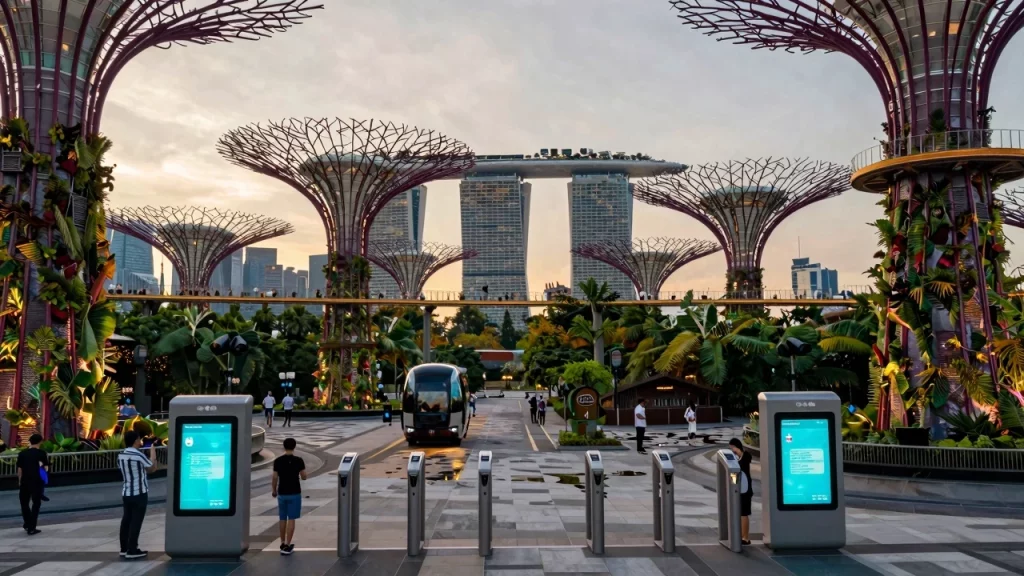
Singapore has long positioned itself as a laboratory for tomorrow’s urban living, but its Smart Nation initiative represents something far more ambitious than mere technological showmanship. Launched in 2014, this comprehensive digital transformation strategy has fundamentally reimagined how a city-state functions—and for the millions of travelers who pass through annually, it has created what industry analysts now call the “frictionless travel experience.” This isn’t about flashy gadgets or superficial convenience; it’s about deploying integrated systems that anticipate needs, eliminate pain points, and create seamless interactions between visitors and infrastructure.
The impact on tourism is profound and measurable. According to the Singapore Tourism Board, visitor satisfaction scores have climbed consistently since 2015, with technology integration cited as a primary factor. But beyond satisfaction metrics, Singapore’s approach offers a blueprint for how smart city technologies can transform tourism from a transactional experience into an intuitive, almost invisible support system that enhances rather than intrudes upon the traveler’s journey.
Transportation Innovation: The Autonomous Revolution
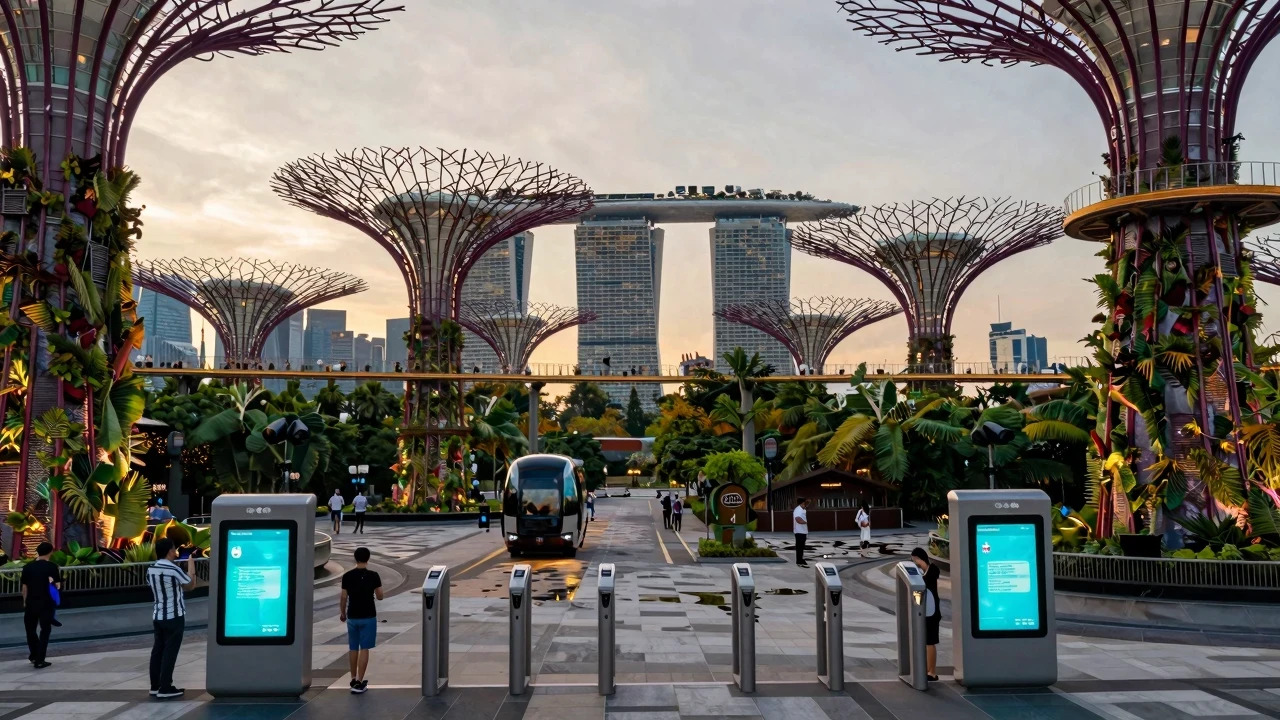
Singapore’s transportation network serves as the backbone of its Smart Nation vision, and nowhere is this more evident than in its pioneering deployment of autonomous vehicle technology. The city-state hasn’t simply tested self-driving cars; it has systematically integrated them into its public transportation ecosystem, creating what transportation engineers call a “multi-modal autonomous network.”
The autonomous shuttle services operating in districts like Sentosa, Jurong, and the National University of Singapore campus represent the world’s first large-scale deployment of driverless public transport in mixed traffic conditions. These aren’t concept vehicles running on closed tracks—they navigate real roads alongside human-driven cars, pedestrians, and cyclists, using a sophisticated array of LiDAR sensors, computer vision systems, and real-time mapping technology.
For travelers, the implications are transformative. Consider the typical friction points in urban tourism: waiting for taxis, navigating unfamiliar public transit systems, dealing with language barriers when asking for directions. Singapore’s autonomous shuttles eliminate these pain points through their integration with the city’s unified mobility platform. Visitors can summon vehicles through the same app that handles MRT tickets, bus routes, and ride-sharing—creating a seamless transportation experience that requires no local knowledge or language skills.
The technology behind this system is remarkably sophisticated. Each autonomous vehicle maintains constant communication with Singapore’s traffic management grid, receiving real-time updates about road conditions, traffic patterns, and optimal routing. Machine learning algorithms continuously refine these routes based on historical data, weather conditions, and special events. The result is a transportation network that becomes more efficient with every journey, learning from millions of data points to optimize the visitor experience.
But perhaps most impressive is how Singapore has addressed the “last mile” problem—the notoriously difficult challenge of connecting major transit hubs to final destinations. Autonomous shuttles now provide on-demand service in tourist-heavy areas, operating on flexible routes that adapt to demand patterns. During peak hours at Marina Bay, for instance, the system automatically deploys additional vehicles and adjusts pickup zones based on real-time crowd density data captured by the city’s sensor network.
Digital Integration: The Invisible Infrastructure
While autonomous vehicles capture headlines, Singapore’s true innovation lies in its invisible digital infrastructure—the interconnected systems that create what technology strategists call “ambient intelligence.” This is where the Smart Nation initiative transcends individual technologies and becomes a cohesive ecosystem.
Contactless payment systems exemplify this integration. Singapore’s unified payment infrastructure allows travelers to use a single credential—whether a smartphone, smartwatch, or contactless card—across virtually every payment scenario. From MRT gates to hawker centers, from museum admissions to taxi fares, the same tap-and-go technology works universally. This isn’t merely convenient; it represents a fundamental rethinking of how payment systems should function in a digital society.
The technical architecture behind this seamlessness is complex. Singapore’s payment infrastructure operates on open standards that allow interoperability between different systems and providers. When a tourist taps their phone at a hawker stall, that transaction connects to the same backend infrastructure that processes MRT fares and retail purchases—but the complexity remains hidden behind a simple gesture.
More sophisticated still is how Singapore has integrated this payment data (in anonymized, privacy-protected form) into its urban planning and tourism management systems. Foot traffic patterns derived from transit data help optimize everything from museum operating hours to the placement of information kiosks. This creates a feedback loop where the city continuously adapts to visitor behavior, making the experience progressively more intuitive.
The digital integration extends to information access as well. Singapore’s nationwide WiFi network, combined with its comprehensive digital wayfinding system, ensures that travelers never experience the disorientation common in unfamiliar cities. But this goes beyond simple connectivity. The city’s information architecture uses geolocation and preference learning to deliver contextually relevant information—restaurant recommendations based on dietary restrictions and location, cultural site suggestions aligned with demonstrated interests, real-time crowd density information to help visitors avoid congested attractions.
Museum experiences showcase this integration particularly well. The National Gallery Singapore and ArtScience Museum have deployed AI-driven exhibit systems that adapt to visitor engagement. Computer vision systems track (anonymously) how long visitors spend with particular artworks, which pieces generate the most interest, and how people move through gallery spaces. This data informs both immediate adjustments—digital displays that provide deeper information when visitors linger—and long-term curation decisions.
These AI systems also power personalized audio guides that adapt their content based on the visitor’s pace, interests, and prior interactions. Rather than following a predetermined script, the guide learns from your behavior: if you spend extra time with contemporary pieces, it offers more context about modern artists; if you’re moving quickly, it provides concise highlights rather than exhaustive detail.
The Changi Experience: Smart Aviation Redefined
If Singapore’s Smart Nation initiative has a showcase, it’s Changi Airport—consistently ranked the world’s best airport and a case study in how technology can transform the travel experience. But Changi’s excellence isn’t about luxury amenities or architectural grandeur; it’s about operational efficiency powered by integrated smart systems.
The airport’s biometric processing system represents the cutting edge of passenger flow management. From check-in through immigration to boarding, travelers can complete their entire journey using facial recognition technology, eliminating the need for repeated document checks and manual processing. This isn’t simply faster—though processing times have decreased by an average of 30%—it fundamentally changes the airport experience from a series of bureaucratic checkpoints to a fluid, almost invisible progression.
The technical implementation is sophisticated. Changi’s biometric system uses advanced facial recognition algorithms that maintain accuracy across varying lighting conditions, angles, and even with accessories like glasses or hats. The system integrates with immigration databases, airline systems, and security protocols, conducting multiple verification checks in the milliseconds it takes a passenger to walk past a camera.
But Changi’s smart systems extend far beyond passenger processing. The airport employs autonomous cleaning robots that navigate terminal spaces using the same sensor technology that guides autonomous vehicles. These robots don’t simply follow predetermined routes; they use AI to identify high-traffic areas requiring more frequent cleaning and adjust their schedules accordingly. They communicate with each other to avoid redundant coverage and coordinate with human cleaning staff for tasks requiring manual intervention.
Baggage handling at Changi represents another triumph of integrated systems. The airport’s automated baggage system uses RFID tracking to monitor every piece of luggage throughout its journey, providing real-time updates to passengers and enabling proactive problem-solving when issues arise. Machine learning algorithms predict potential bottlenecks and automatically reroute bags to prevent delays. The system achieves a 99.9% accuracy rate—industry-leading performance that directly translates to fewer lost bags and reduced traveler stress.
Perhaps most impressive is Changi’s predictive maintenance system. Thousands of sensors throughout the airport monitor everything from escalator performance to air conditioning efficiency, feeding data into AI systems that predict equipment failures before they occur. This predictive approach has reduced unplanned maintenance events by 40% and ensures that travelers rarely encounter out-of-service facilities.
The airport’s wayfinding system demonstrates how digital and physical infrastructure can merge seamlessly. Digital displays throughout the terminals provide personalized directions based on your flight information, automatically updating as gates change or boarding times approach. The system integrates with the airport’s mobile app, providing turn-by-turn navigation that accounts for current crowd density, security wait times, and even your walking speed (calculated from your phone’s sensors).
The Frictionless Future
Singapore’s Smart Nation initiative succeeds not because it deploys the most advanced technology—though it often does—but because it understands that the best technology becomes invisible. The frictionless travel experience isn’t about dazzling visitors with innovation; it’s about removing the countless small obstacles that typically complicate travel: the confusion of unfamiliar transit systems, the frustration of payment incompatibilities, the anxiety of navigating airports, the disappointment of poorly timed museum visits.
What makes Singapore’s approach particularly noteworthy is its systematic integration. These aren’t isolated pilot projects or disconnected innovations; they’re components of a comprehensive digital ecosystem where each element enhances the others. The same backend infrastructure that enables contactless payments also powers transit optimization. The sensors that guide autonomous vehicles also inform crowd management systems. The AI that personalizes museum experiences draws on the same machine learning platforms that predict airport maintenance needs.
This integration creates network effects where the value of each technology multiplies as it connects with others. A tourist using Singapore’s transportation system isn’t just accessing a smart transit network; they’re tapping into an entire urban intelligence system that optimizes their experience across multiple dimensions simultaneously.
As cities worldwide grapple with overtourism, infrastructure strain, and the challenge of delivering quality experiences to growing visitor numbers, Singapore’s model offers valuable lessons. The Smart Nation initiative demonstrates that technology, thoughtfully deployed and systematically integrated, can enhance rather than diminish the human experience of travel. It shows that efficiency and delight aren’t opposing values but complementary goals achievable through intelligent design.
The future of urban tourism likely looks much like Singapore today: cities as responsive, adaptive systems that anticipate needs, eliminate friction, and create space for travelers to focus on what matters—the experiences, connections, and discoveries that make travel meaningful. In this future, technology doesn’t mediate the travel experience; it enables it, working invisibly to ensure that the only thing visitors need to think about is what they want to see, do, and discover next.

King
Independent editors covering practical technology, online services and better buying decisions.